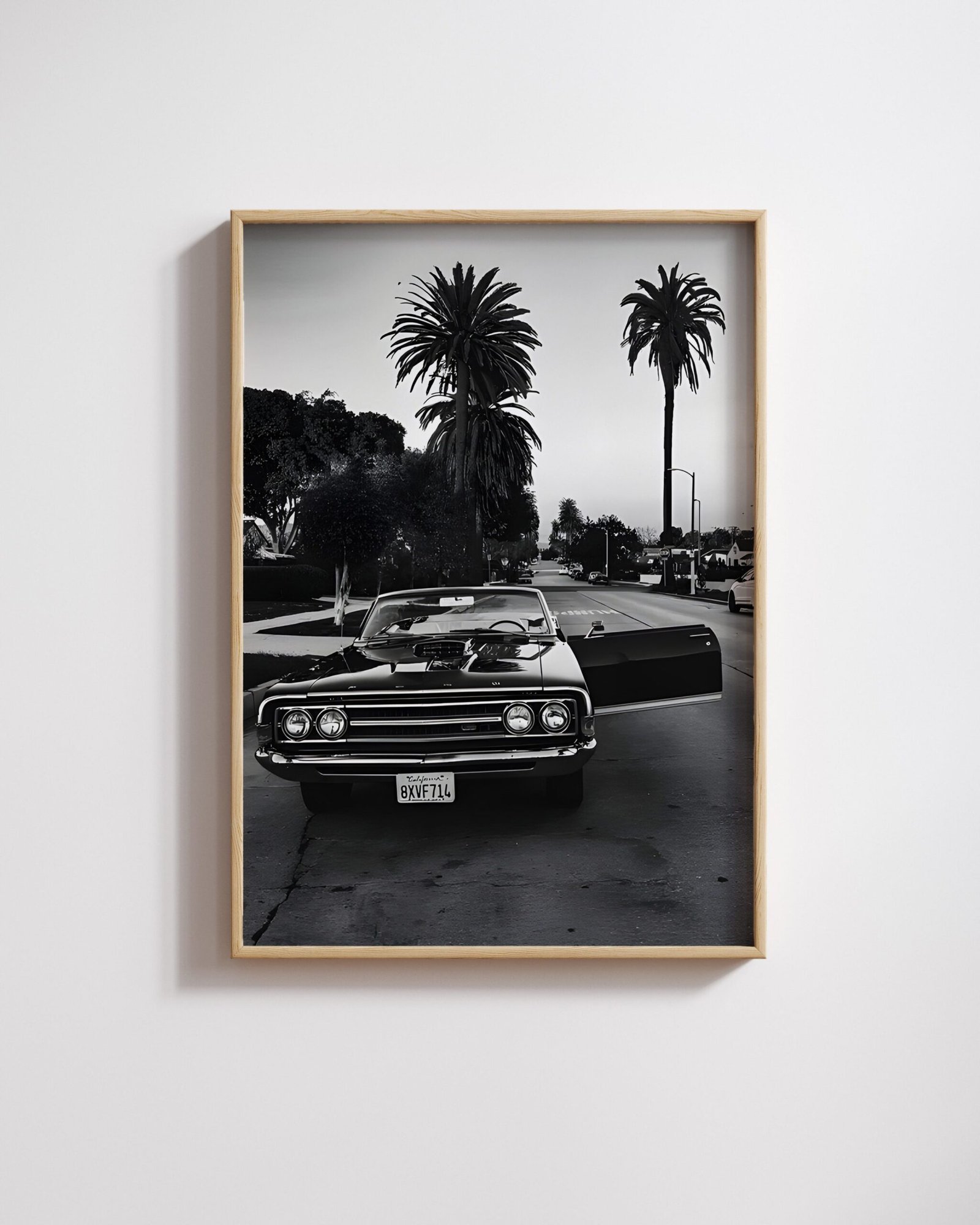
Chevrolet Impala history is the outlier in a shop that mostly sells European shapes: a German silhouette that has not changed since 1963, a British wing that survived two world design eras, an Italian door that opens the wrong way on purpose. The Impala is a full-size American sedan whose story is not about a chassis engineer’s brief but about how many of a single car General Motors could build and sell. That is a different kind of history, and it is worth telling on its own terms.
Chevrolet Impala history begins as a trim level, not a car
The name first appeared on a one-off, fibreglass-bodied show car at the 1956 GM Motorama. Two years later it was real: the 1958 Impala was the top-level trim of the Bel Air, sold as a two-door hardtop or convertible and designed under GM’s Harley Earl. It was, Chevrolet’s own historical record notes, the first Chevrolet to offer dual headlamps and triple taillights — two details that would define the brand’s look for years afterward. In that first year, 55,989 convertibles and 125,480 coupes were built, 15 per cent of everything Chevrolet made.

1959: its own series
A trim level does not stay a trim level if it is outselling the car it is trimming. For 1959 the Impala became a separate series in its own right, adding four-door sedans and station wagons to the two-door body styles, with a redesigned tail treatment — a wide, flat “teardrop” shape that replaced the symmetrical round lights of the year before.

The 50-millionth Chevrolet, and a sales record no model has matched since
On 10 June 1963, a gold Impala rolled off the line at Chevrolet’s Tarrytown, New York plant as the 50-millionth Chevrolet ever built, with New York’s governor taking part in the ceremony on the factory floor. Two years later, the 1965 Impala set a record that still stands as a description of one very specific moment in American car buying: more than one million units of a single model sold in the United States in a single year, an all-time industry record.
1977, and the long goodbye
The 1977 model year took the Impala in the opposite direction from the cars this shop otherwise carries — not bigger, but smaller. The redesign downsized the car for the first time since 1958, and it won Motor Trend’s Car of the Year award for the change. The nameplate itself did not survive much longer: production of the original Impala ended after the 1985 model year. It came back twice more — as a high-performance SS sedan from 1994 to 1996, and as a mainstream model from 2000, a run that closed in 2020.
Which print
The store’s Impala print does not state which model year or generation it shows, so this article treats it the way it treats an unlabelled 911 — as a representative of the nameplate rather than a claim about one specific car. What the photograph does show plainly is the shape this history describes: a full-size American sedan built for volume, not for a subculture or a single collector’s market.
If you want a road car from the same American decade with its year actually on record, the 1967 Mustang print is the one print in the catalogue that carries a stated date, and the two work together as a pairing of Detroit’s volume seller against its performance one.
Both are made to order on 200gsm archival matte paper, pigment giclée at 300 dpi, with the full size ladder on each product page.
Related reading: the BMW E30 M3, built because a rulebook demanded it, and the Mercedes 300 SL, whose doors were an engineering answer, not a styling one.
Common questions
When did the Chevrolet Impala first come out?
The name first appeared on a 1956 GM Motorama show car, and the production Impala arrived for the 1958 model year as the top trim of the Bel Air, available as a two-door hardtop or convertible. It became its own separate model series in 1959.
Why is it called the Impala?
Chevrolet named it after the African antelope and used the animal as the car's badge - a departure from the numbers and initials used elsewhere in the lineup at the time, and part of why the name outlasted most of its contemporaries.
Was the Impala ever the best-selling car in America?
Yes. The 1965 model year set an all-time US industry sales record of more than one million units of a single model, a figure Wikipedia's production data attributes to the Impala, and it held the position of Chevrolet's top seller for more than a decade.
When did Chevrolet stop making the Impala?
Production of the original nameplate ran 1958 to 1985. It returned twice more: as a high-performance SS sedan from 1994 to 1996, then again as a mainstream sedan from 2000, with 2020 marking the end of that final, longest-running generation.


