Ayrton Senna first win: Estoril, 21 April 1985. He led all 67 laps of the Portuguese Grand Prix and won it by 62.978 seconds. Michele Alboreto’s Ferrari was the only other car on the lead lap. Third place was a lap down, and so was Senna’s own team-mate.
It was his first Grand Prix victory and his first pole position. It was also only his second race for Lotus.
Ayrton Senna first win: Estoril, 21 April 1985
Round two of the season at the Autódromo do Estoril, a fortnight after the opener at Jacarepaguá. Wikipedia’s race report gives the conditions as overcast, cold and raining, and records that Senna led every lap from pole, which he had taken the previous day at 1:21.007.
Formula 1’s own results archive lists the race as 67 laps and the winning time as 2:00:28.006 — two hours and twenty-eight seconds, against a schedule of 70 laps. Alboreto came in 62.978 seconds later. Patrick Tambay’s Renault was third, a lap behind; Elio de Angelis, in the identical Lotus, was fourth, also a lap behind.

That last detail is the one worth sitting with. The sister car, same chassis, same engine, driven by a Grand Prix winner in his sixth full season, finished a lap down.
What rain actually decides
Wet weather does not make a slow car quick. What it does is shrink the part of a lap that the car wins for you and enlarge the part the driver has to win for himself. Grip stops being a property of the tyre and becomes a judgement made continuously, corner by corner, about how much of it is left.
Estoril is remembered as a great drive rather than a good result because of the margin and the duration together. A minute and three seconds over a works Ferrari, across two hours, with no mistake large enough to cost a place — that is not a car advantage. The Lotus was quick that year but it was not a minute quicker than a Ferrari.
1984, and why 1985 was not a surprise
Anyone paying attention had already seen it. Formula 1’s Hall of Fame entry for Senna describes his second place to Alain Prost’s McLaren in the rain-curtailed 1984 Monaco Grand Prix, in his first season, in a Toleman. Wikipedia’s account adds the detail: he qualified 13th, passed Niki Lauda for second on lap 19, and was closing on Prost at roughly four seconds a lap when the race was stopped on lap 31.
Monaco 1984 is the drive people quote. Estoril 1985 is the one that finished.
The car
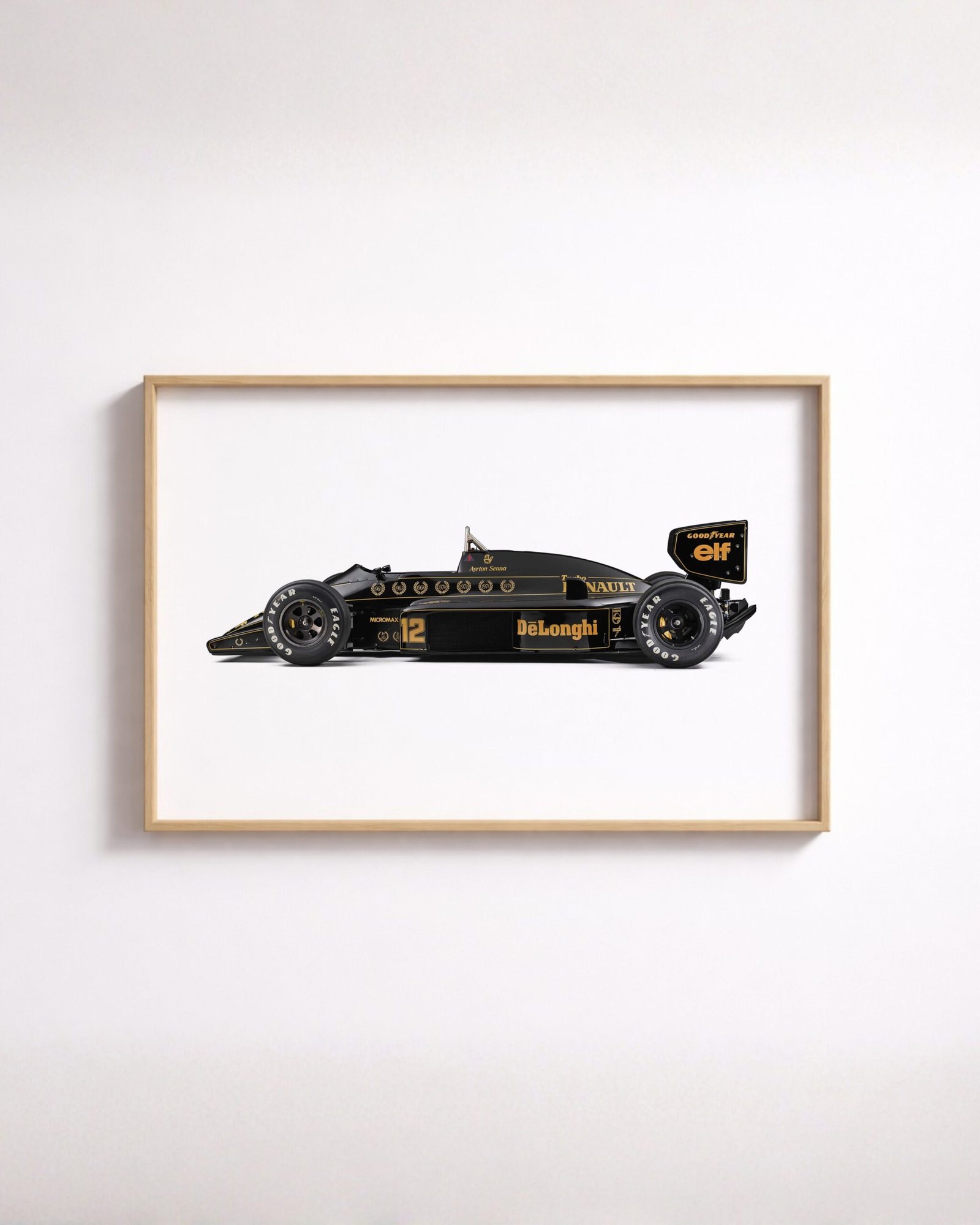
The Lotus 97T was built under technical director Gérard Ducarouge with Martin Ogilvie as chief designer: a carbon-fibre monocoque around a 1.5-litre turbocharged Renault V6, entered by John Player Special Team Lotus in the black and gold the team raced in for a decade.
It was a genuinely fast car and not the fastest. Over the 1985 season it took eight pole positions — seven of them Senna’s — and three wins, and finished fourth in the constructors’ championship on 71 points. Alain Prost’s McLaren won five races that year to Senna’s two.
Which is the ordinary shape of a first win, and worth saying plainly because the mythology usually removes it: Senna’s first victory came in the fourth-best car of the season, on the one weekend when that mattered least.
What followed
He finished 1985 fourth in the championship with two wins, the second at Spa, and seven poles, alongside de Angelis. Across three seasons at Lotus, Formula 1’s Hall of Fame records six wins and sixteen poles.
The career totals are 41 wins, 80 podiums and 161 starts, and 65 pole positions, which Formula 1 still lists as the record. Three world championships, in 1988, 1990 and 1991. He was killed on 1 May 1994 at Imola, leading the San Marino Grand Prix in a Williams FW16, aged 34.

The one print in this collection that can name a race
The Lotus 97T print names the car, the number and the Grand Prix: Senna, 97T, car 12, Portugal 1985. That is unusual here, and it is deliberate. We name a driver, a machine or a race on a listing only where the subject is documented; where it is not, the listing describes what is in the frame and stops there. We do not say where or when a photograph was taken, because for almost everything in this collection nobody knows.
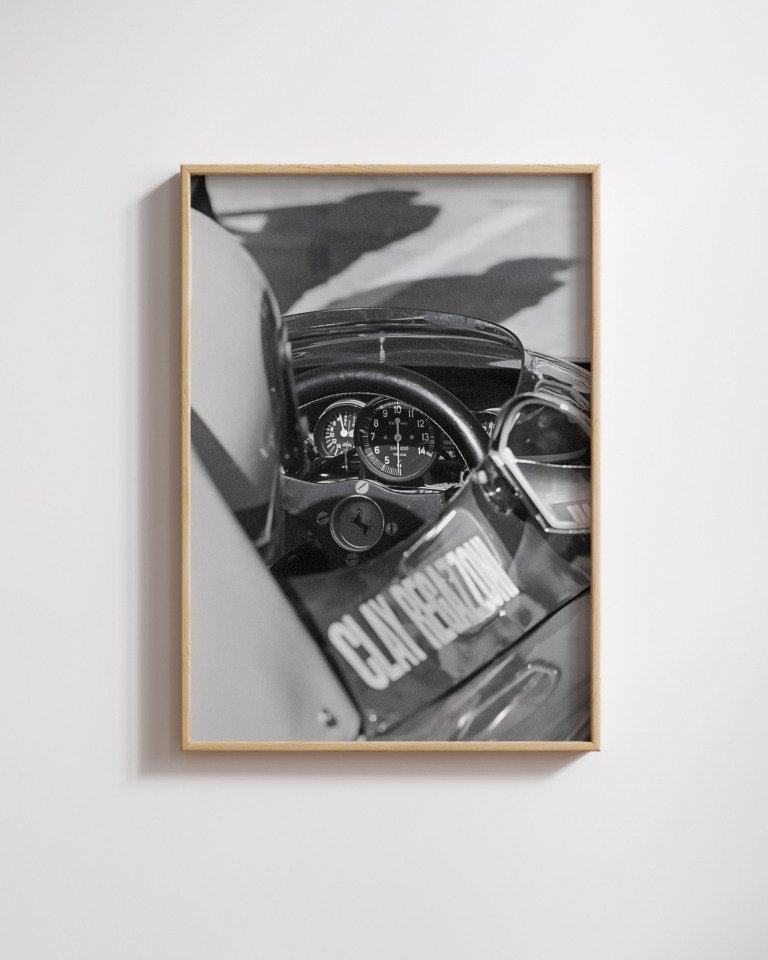
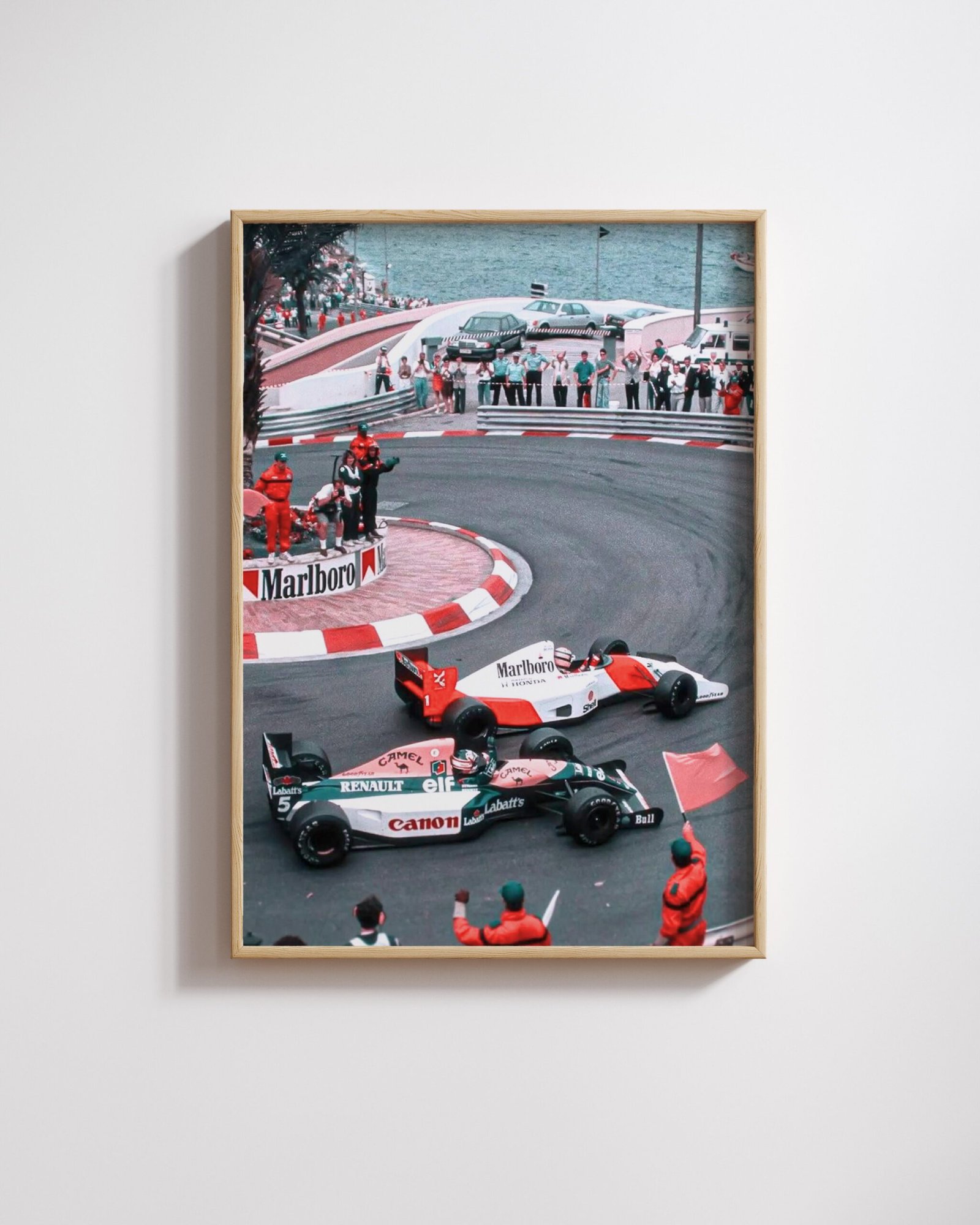
The other three Senna prints are written to that same rule. Senna at Monaco names the circuit and no year — and six years would be defensible. The 1991 McLaren print names the season and not the race. The portrait names nothing but the man.
If you want the wider context for how a Formula 1 car of this period looks the way it does, the shape of the car dates it — the 97T sits in the middle of the turbo era, and it looks like it.
Every print is made to order on 200 gsm archival matte paper, pigment giclée at 300 dpi, on the press within 72 hours and shipped tracked and free worldwide.
Common questions
What car did Ayrton Senna win his first Grand Prix in?
The Lotus 97T, entered by John Player Special Team Lotus and built under technical director Gérard Ducarouge with Martin Ogilvie as chief designer. It used a carbon-fibre monocoque around a 1.5-litre turbocharged Renault V6. Senna led all 67 laps of the 1985 Portuguese Grand Prix at Estoril from pole and won by 62.978 seconds.
Was Estoril 1985 also Senna's first pole position?
Yes. He took it the day before at 1:21.007, then led every lap of a race run in cold, overcast, wet conditions. It was only his second race for Lotus. His team-mate Elio de Angelis, in an identical car, finished fourth, a full lap behind the winner.
How many pole positions did Senna take in his career?
Sixty-five. That was the Formula 1 record when he died in 1994, but it has since been passed: Michael Schumacher reached 68 and Lewis Hamilton has taken more than a hundred. Senna's other totals are 41 wins, 80 podiums, 161 starts and three World Championships, in 1988, 1990 and 1991. He is now third on the all-time pole list.
Does the Lotus 97T print say which race it shows?
Yes, and it is the only print in this collection that names a Grand Prix. The listing gives the car, the race number and the event, because the chassis and the number identify it. Everywhere else the listings describe what is in the frame and stop there, since we do not know when or where those photographs were made.
Why is Estoril remembered when Senna won 41 races?
Because of the margin and the duration together. He beat a works Ferrari by a minute and three seconds across two hours in the rain, without a mistake large enough to cost a place. The sister Lotus, same chassis and same engine, finished a lap down. A gap like that belongs to the driver, not the car.