This poster size comparison starts with two sheets that look interchangeable and are not. A 24×36 inch poster measures 60 x 90 cm; A1 measures 59.4 x 84.1 cm. The width is near enough identical — 6 mm apart — but A1 is a full 5.9 cm shorter on the long edge, and the two are not even the same shape. Neither fact is obvious from a size chart alone, which is why the two get mixed up constantly.
How big is 24×36 poster, exactly
The nominal name describes a frame opening, not the paper itself. The sheet trimmed for a 24×36 frame measures 23.6 x 35.4 inches — 60 x 90 cm — a shade under 24 x 36 inches on both edges, because it is cut to sit inside a standard frame rebate rather than to hit 24.0 and 36.0 exactly.
How big is A1, exactly
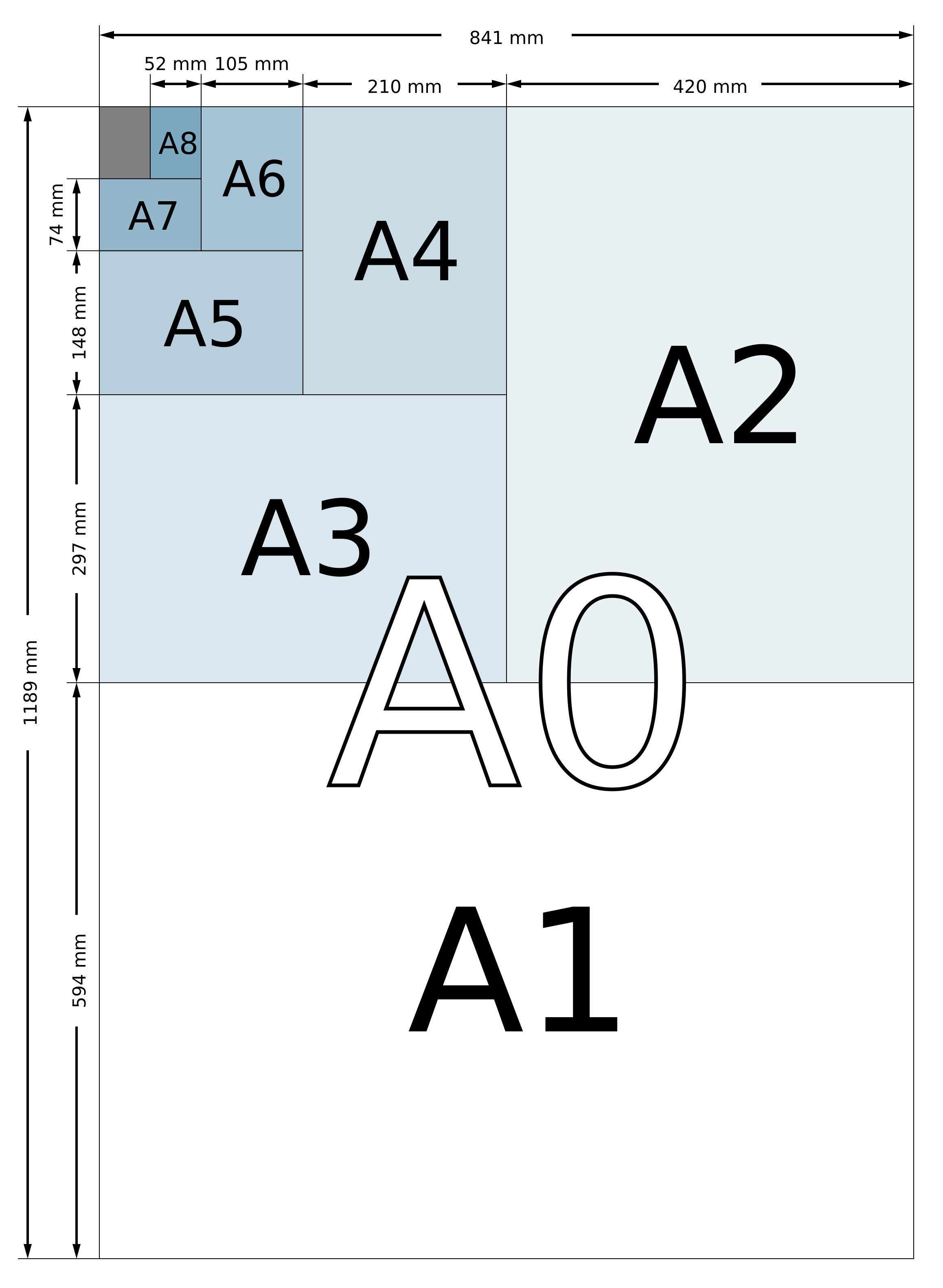
A1 is defined by ISO 216, the international paper size standard, at 594 x 841 mm — 59.4 x 84.1 cm, or 23.4 x 33.1 inches. It is exactly half of A0 and exactly double A2, part of a sequence that has nothing to do with the 24×36 inch frame tradition.

24×36 vs A1: the poster size comparison in full
| Size | Centimetres | Inches | Long edge vs 24×36 |
|---|---|---|---|
| 60×90 cm (24×36″) | 60.0 × 90.0 cm | 23.6 × 35.4 in | — |
| A1 | 59.4 × 84.1 cm | 23.4 × 33.1 in | 5.9 cm shorter |
5.9 cm is roughly the width of a smartphone held sideways — enough to leave a visible gap at the top of a frame cut for the wrong one, and enough that a print bought for one size will not sit flush in a frame bought for the other.
Why the shapes are different, not just the sizes
60×90 is a 2:3 ratio — divide the short edge into three and the long edge is exactly twice that. A1 is 1 to the square root of 2, about 1:1.414, the ratio every A size shares. The two ratios are close enough to look interchangeable in a thumbnail and different enough that an image cropped to fill one will not fill the other without cropping again — a detail that matters most when choosing which size to order a specific print in, since the crop is set at the sheet and is not adjustable afterwards.
What each one fits, once a frame is involved
Off-the-shelf frames follow whichever standard the shop selling them grew up with. A frame sold as 24×36 inches is cut for a 60 x 90 cm sheet; a frame sold as A1 is cut for 59.4 x 84.1 cm. Put an A1 sheet in a 24×36 frame and 5.9 cm of the opening sits empty at one end, which reads as a mistake rather than a margin. It also runs the other way: a 60 x 90 cm sheet will not go into an A1 frame at all, because it is longer than the opening. This catalogue lists its sizes in centimetres and offers framing from 27×35 cm to 70×100 cm, so 60 x 90 cm sits inside that range and A1 is not a size on the ladder at all.
Which one to choose
If a frame is already owned, match the sheet to it — a 24×36 inch frame wants the 60×90 cm print, a true A1 frame wants A1. If neither is owned yet, either can simply be ordered outright: the Porsche 911 (930) print carries both 60×90 cm and A1 side by side, and so do the BMW E30 M3 and Ayrton Senna at Monaco prints, so the choice does not narrow what is available.
The full size guide covers the whole 17-size ladder in both units, and the A2 size guide works through why A1, A2 and A3 share this same 1:√2 shape. For what changes once either size is framed rather than shipped rolled, framed or rolled covers that separately.
Common questions
How big is a 24x36 poster compared to A1?
Close but not equal. A 24x36 inch poster is 60 x 90 cm; A1 is 59.4 x 84.1 cm. The width is nearly identical, 6 mm apart, but A1 is 5.9 cm shorter on the long edge — enough to leave a visible gap in a frame cut for the wrong one.
Is a 24x36 poster the same shape as A1?
No. 60x90 cm is a 2:3 ratio; A1 is 1 to the square root of 2, about 1:1.414. They look similar on a size chart, but an image cropped to fill one will not fill the other without cropping it again.
Which is bigger, 24x36 or A1?
60x90 cm (24x36 inches) is bigger on the long edge — 90 cm against A1's 84.1 cm — while the short edges are almost the same, 60 cm against 59.4 cm. Area-wise, 60x90 cm is the larger sheet by a small margin.
Can I use an A1 frame for a 24x36 poster?
Not without a gap. A1 is 5.9 cm shorter than a 60x90 cm sheet on the long edge, so a 60x90 print in a true A1 frame will not reach the top of the opening. Match the frame to the exact size ordered rather than assuming the two are interchangeable.