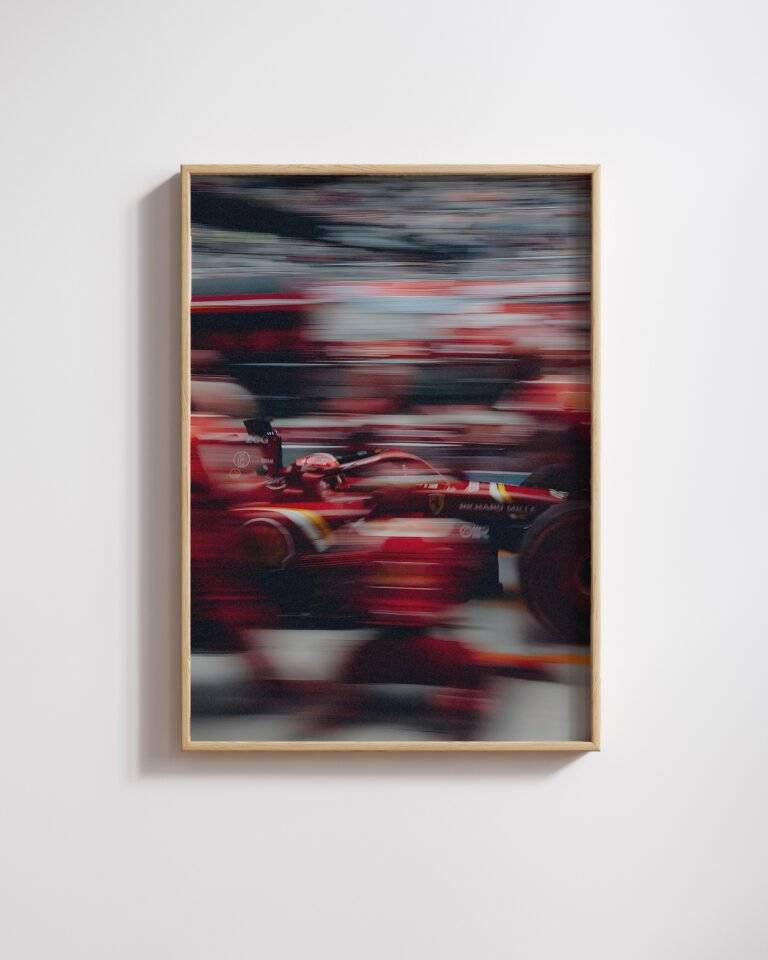
Where to hang art out of sunlight is the question most people think to ask, and it is the right one to start with — but it is not the only hazard in an ordinary room. Sunlight is the obvious threat because you can watch it move across a wall. Humidity and heat do their damage more quietly, on walls that look perfectly safe.
This is a placement question, not a framing one — framed or unframed: which print to order goes into what a frame does and does not change about how a print ages. This page is about the wall itself.
Where to hang art out of sunlight: watch it for a full day
Damage from light exposure is cumulative and irreversible — it does not reset overnight, and a small daily dose adds up the same way a large one would, just slower. The recommendation for works of art on paper is a maximum of 50 lux, which is dim compared to ordinary daylight, with UV ideally between 0 and 10 microwatts per lumen and never above 75.
What that means in practice: check a wall at different times of day and different seasons before committing to it, not just when you happen to be standing in the room. Low winter sun travels further into a room than high summer sun does, so a wall that looks shaded on an August afternoon can catch direct light for an hour every January morning instead.

Bathrooms and kitchens: the humidity problem
The recommended range for paper-based collections is 30 to 50 percent relative humidity, and the risk is not a single damp afternoon but repeated swings outside that band. Excess humidity encourages mould and mildew and accelerates chemical deterioration in the paper itself, while a room that swings from very humid to very dry causes paper to expand and contract, which is what leads to cockling and a print that no longer sits flat against its mat or glazing.
A bathroom with a shower running daily, or a kitchen near a stovetop, both swing well outside that band on a routine basis — which does not make either room impossible, but does make an interior wall away from the steam a meaningfully safer choice than the wall directly opposite the shower.
Radiators, vents and fireplaces: the heat problem
Recommended storage temperature for paper sits around 60 to 70°F (16-21°C), and the advice that matters more than the exact number is to minimise fluctuation. A wall directly above or beside a radiator, an active vent or a working fireplace runs consistently warmer and drier than the rest of the room, on a cycle that repeats every heating season — which is the same kind of repeated stress that causes damage anywhere else in the home.

Exterior walls: the one nobody checks
An exterior wall runs colder in winter and hotter in summer than an interior partition wall does, simply because it has weather on the other side of it. That is a quieter version of the same fluctuation problem as a radiator — smaller swings, but constant ones, all year rather than one season. An interior wall, away from windows and away from the building’s outer skin, is the steadiest environment available in most homes, which is also usually the least dramatic-sounding advice and the easiest to actually follow.
What a permanence rating does and does not tell you
Printed permanence figures come from accelerated tests, and the accepted industry method is glass-filtered light at high intensity for many hours a day, with ratings typically quoted using a glass filter of roughly 30% UV filtration to simulate a print behind glass. That is a description of how the test is run — it is not a claim about any specific frame, including ours, and it is not a substitute for choosing the wall carefully in the first place. Framed or unframed: which print to order covers what a frame does and does not do for longevity in more depth; pigment giclée and 200gsm matte, explained covers the paper itself.
A quick placement checklist
- Check the wall at different times of day and different times of year, not just once.
- Keep prints out of bathrooms with daily shower use, or well away from the steam if the room is the only option.
- Leave distance from radiators, active vents and working fireplaces — a metre or more, out of the direct rising heat.
- Favour interior walls over exterior ones where the choice exists.
- When none of the above can be avoided, that is the wall to hang something replaceable on, not the print you would mind losing.
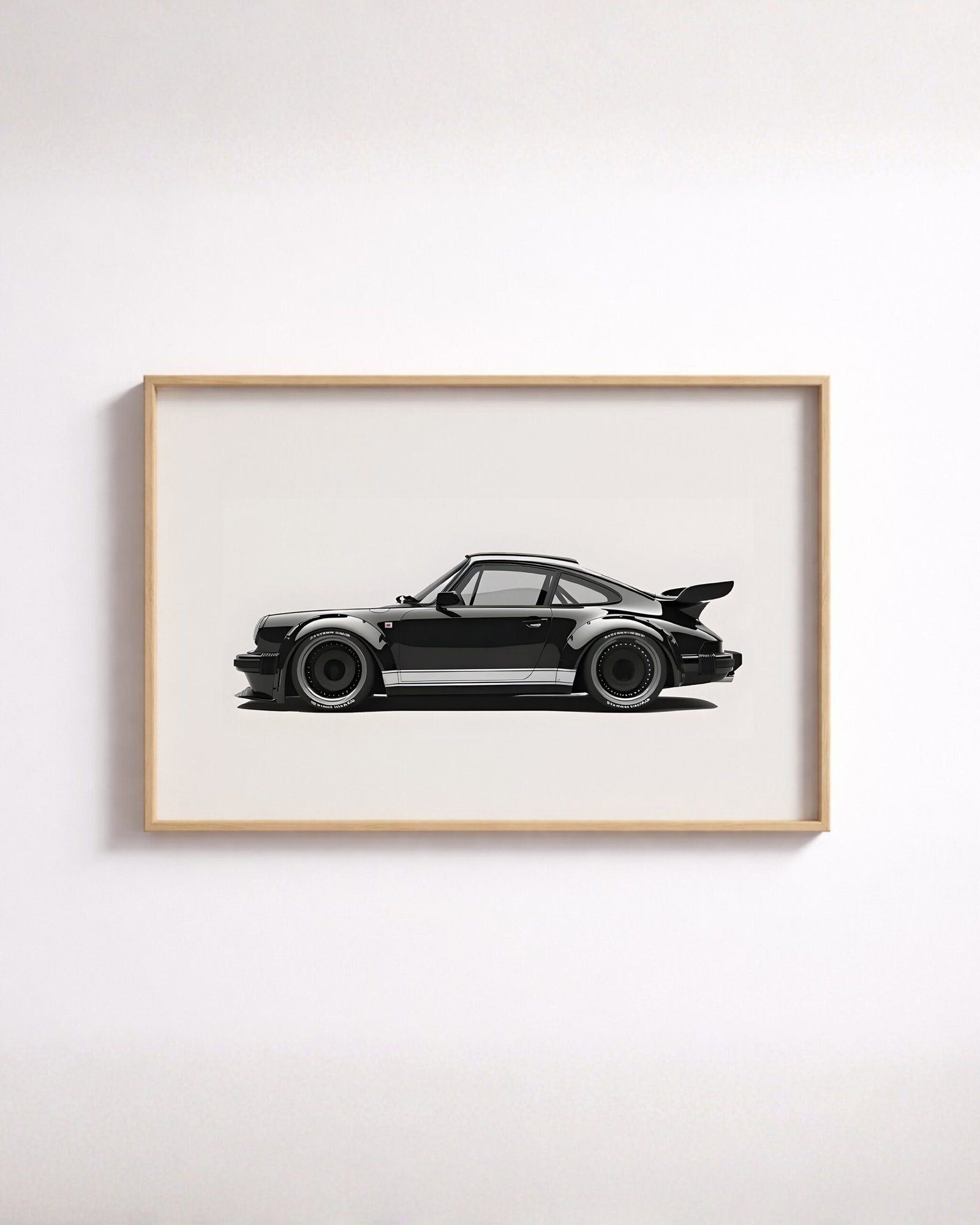
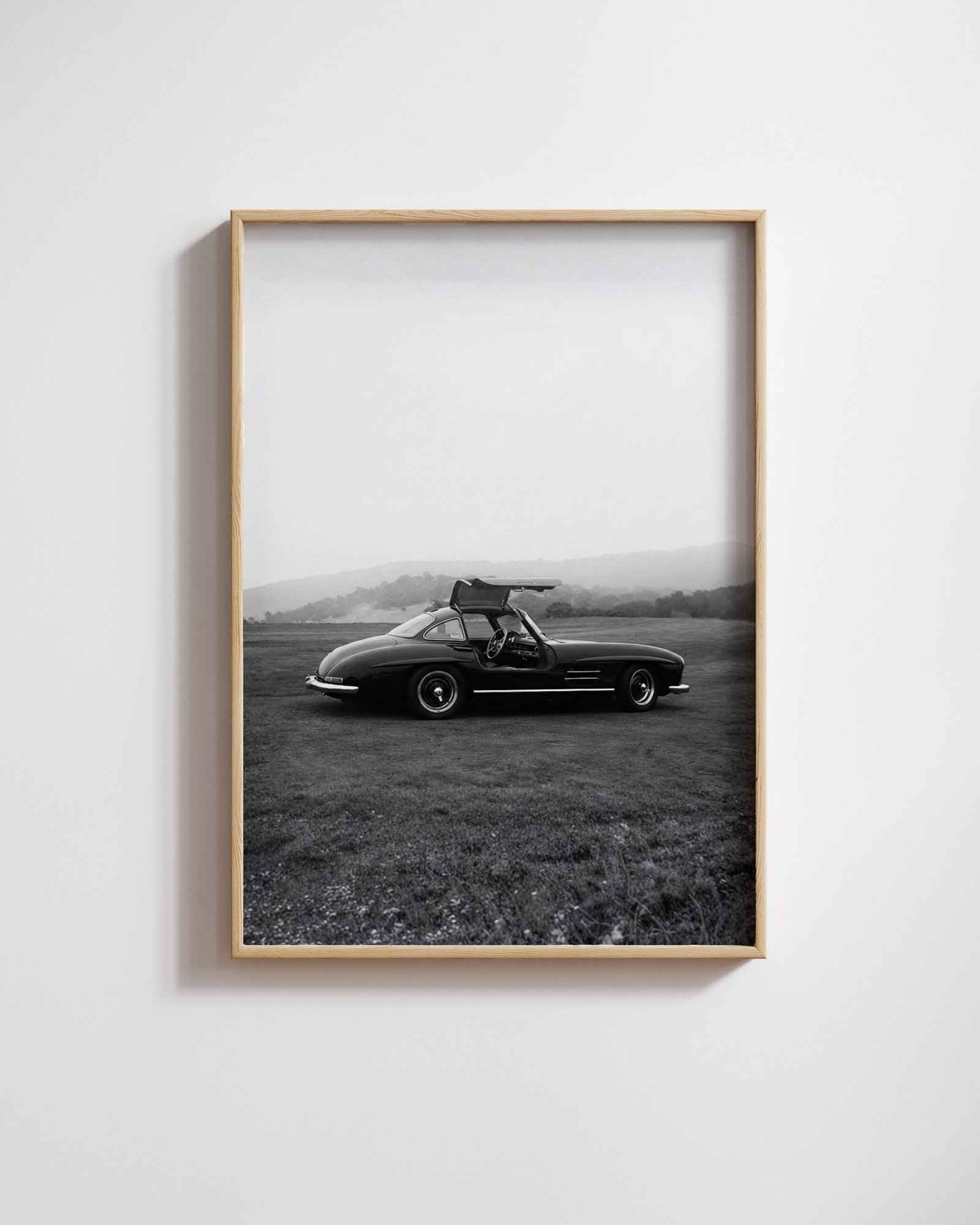
None of this is a reason to leave a wall bare. It is a reason to spend five minutes choosing which wall, before spending money on what goes on it — the Mercedes 300 SL Gullwing poster and the Porsche 911 Turbo (930) poster will look exactly as good on a shaded interior wall as on a sunlit one on the day they arrive — the point of this page is what happens after that.
Common questions
Can I hang a print near a window if it doesn't get direct sun?
Generally yes, but track the light across a full day and a full year before deciding — low winter sun reaches further into a room than summer sun, and a wall that is shaded in July can catch an hour of direct light in January. If in doubt, a wall at right angles to the window is safer than one facing it.
Is a bathroom really that bad for a paper print?
Humidity is the issue, not the room's name. A bathroom with a shower running regularly swings well outside the 30-50% relative humidity recommended for paper collections, and repeated swings — not one damp afternoon — are what causes cockling, mould risk and a frame that no longer sits flush.
How close is too close to a radiator?
There is no fixed distance, but the wall directly above or immediately beside a radiator runs warmer and drier through every heating season than the rest of the room, and that fluctuation is the problem more than the peak temperature. A wall a metre or more away, out of the direct rising heat, is the safer default.
Do prints fade the same everywhere in a room?
No. Fading tracks cumulative light exposure, not room temperature or general brightness, so a print catching two hours of direct afternoon sun daily will visibly change faster than one on an interior wall lit only by room lighting, even in the same room under the same roof.