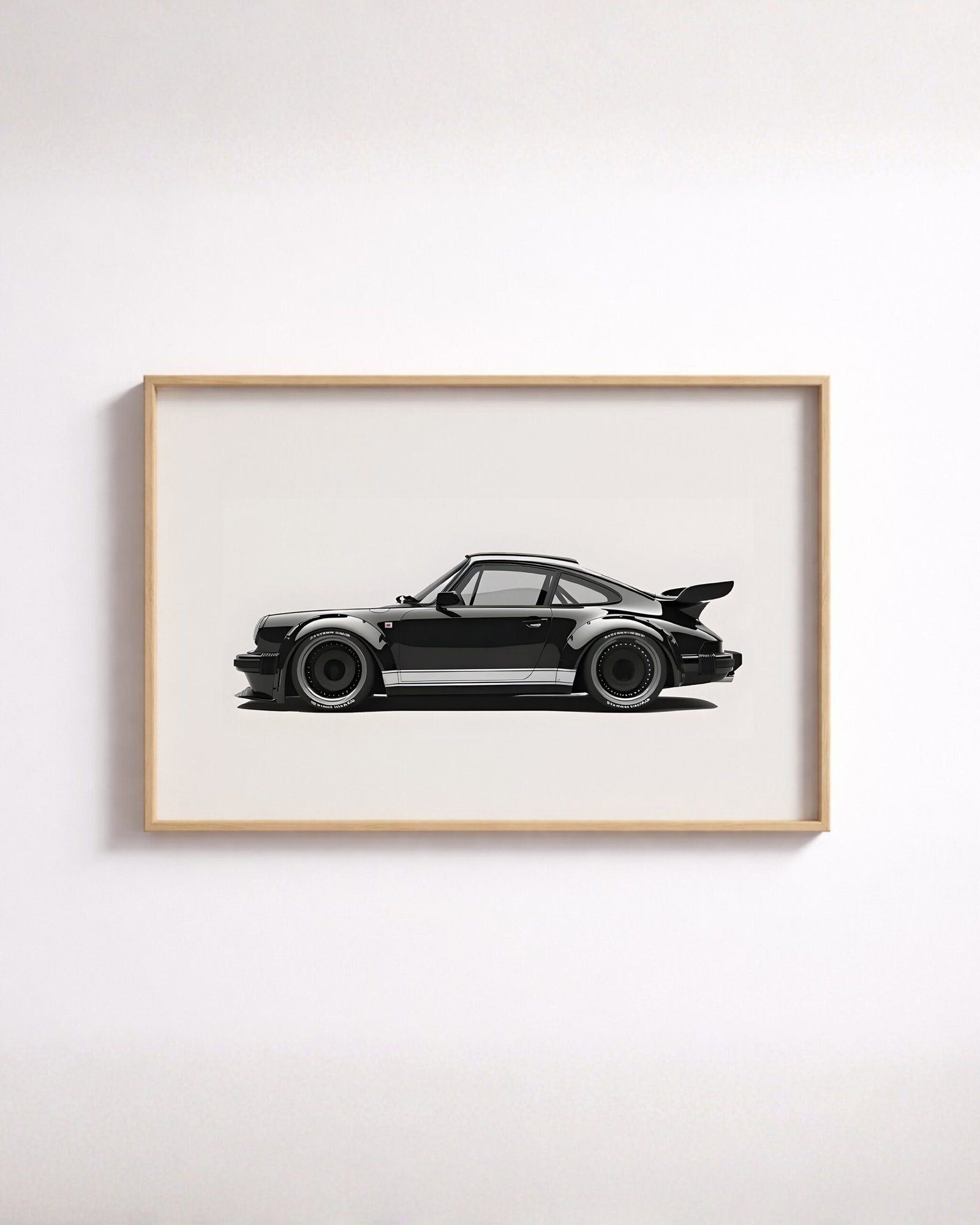
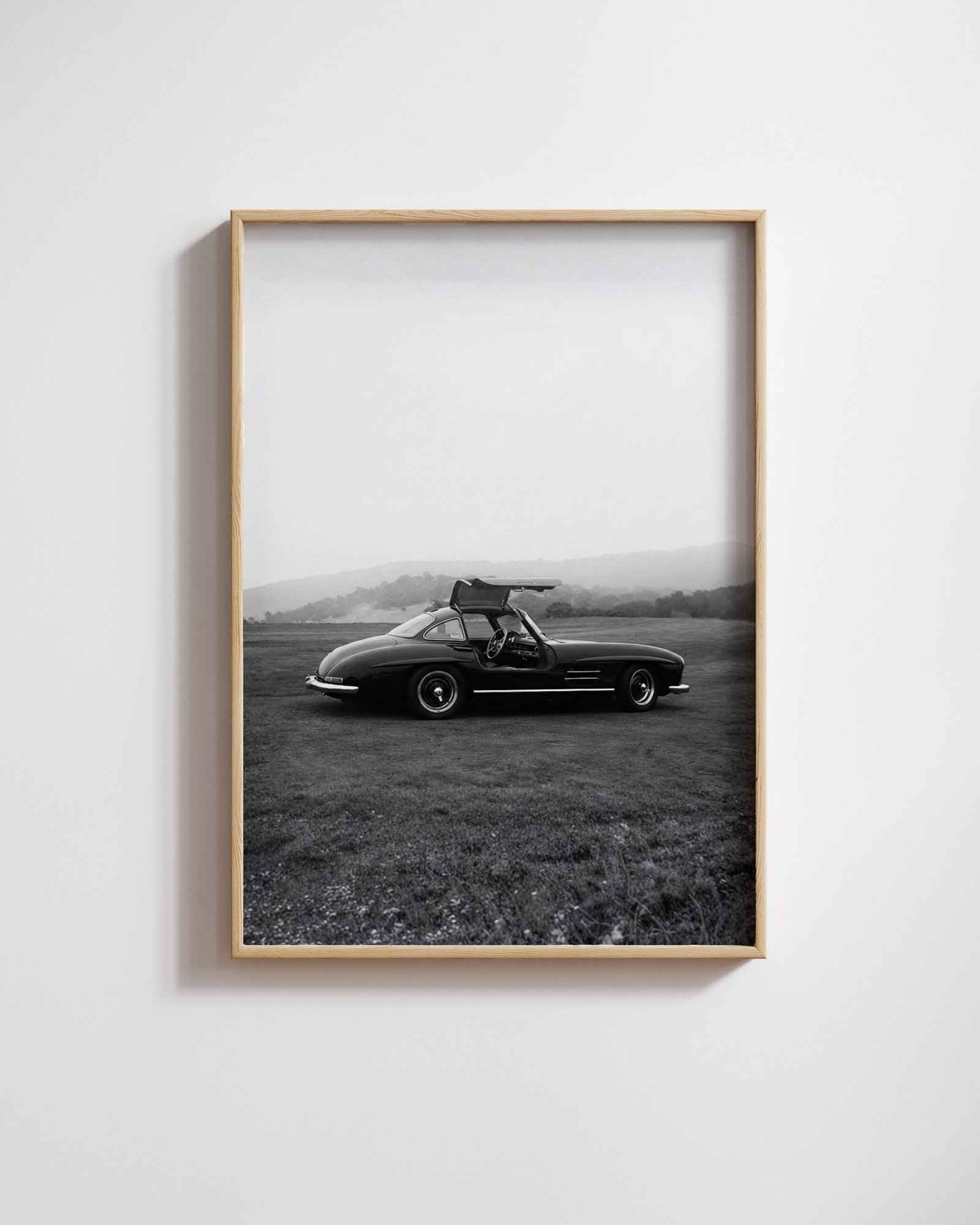
Framed print vs framed canvas sounds like one choice at two price points, and it is not. They are built differently, they behave differently on a wall, and one of them loses part of the image on purpose. Here is what actually differs, not just which one costs more.
Short version: a framed print is a sheet of paper set inside a proper frame. A canvas print is fabric stretched over a wooden frame with no glazing at all, and often no visible frame either — the canvas edge is the frame.
What a canvas print actually is
A canvas print is an image printed onto canvas and then stretched, or gallery-wrapped, around a wooden stretcher. Because the stretcher itself usually is not visible and the canvas is not meant to be handled like a painting, it typically needs no glazing and no varnish — the surface is just left exposed. Gallery wrap works by folding the canvas around the sides of the stretcher bar and securing it to the back, and that stretcher bar generally runs about 1.25 inches — roughly 4 cm — thick. Those wrapped sides conceal roughly two inches of the image on every edge, invisible from the front once it is hung.
That last detail is the one people run into after the fact: a canvas print made from a photograph or illustration composed edge-to-edge, the way ours are, loses a strip of that composition around all four sides unless it was designed with the wrap in mind.

What a framed paper print actually is
Ours is a sheet — 200gsm archival matte paper, pigment giclée at 300 dpi — set inside a solid wood frame, assembled by hand, with hanging hardware already fitted to the back. Nothing is folded around a wooden edge and nothing is lost off the composition: the sheet you see on the product photo is the sheet that arrives, full bleed to the trimmed edge. Framing is available 27×35 cm to 70×100 cm.
Framed print vs framed canvas: side by side
| Framed paper print | Canvas print | |
|---|---|---|
| Glazing | Varies by shop and frame — we do not publish a spec either way | Typically none — the surface is left bare |
| Full image shown | Yes, edge to edge on the trimmed sheet | Usually not — roughly 2 in per edge is wrapped and hidden |
| Surface texture | Smooth matte, detail reads sharp up close | Woven texture visible in the surface itself |
| Visible frame | Yes — moulding is part of the look | Often none — the wrapped canvas edge is the frame |
| Cleaning | Wipe the glazing if fitted, never the paper | Light dusting of the canvas surface directly |
Which suits which print
Fine surface detail — the kind a sharp photograph or a precise illustration depends on — reads more accurately off a smooth matte sheet than through a woven canvas texture, which softens fine lines and grain wherever the weave sits underneath them. Bold, graphic compositions with large areas of flat colour or shape tend to survive that texture better, because there is less fine detail for the weave to compete with.
Most of what is in this catalogue — motorsport photography, portraiture, architectural detail — is the first kind, which is a real part of why it prints on matte paper rather than canvas.

Why we do not sell canvas
Every print in this shop is pigment giclée on 200gsm archival matte paper, and that choice is made once for the whole catalogue rather than offered as an option per print. It suits the photography and illustration work here better than a woven surface would, and it means one honest material claim instead of two competing ones. Pigment giclée and 200gsm matte, explained covers what that paper actually is.
Choosing between them for your own wall
If a woven, frameless look is what you are after, canvas is the right category to shop in — just budget for the roughly two-inch margin the wrap needs. If what you want is a framed piece with no part of the image hidden and a moulding that reads as a deliberate frame rather than an absence of one, that is what a framed paper print gives you, and the cost comparison sets our own framed range against local shop pricing for exactly that option. Framed or unframed: which print to order is the next question once framed paper is the category you have settled on. The Vintage F1 Pit Lane Kiss print and the Porsche 911 Turbo (930) poster both show what full-bleed matte paper looks like framed, with nothing folded away at the edges.
Common questions
Is a canvas print worth it over a framed paper print?
It depends what you are paying for. Canvas buys a frameless, textured look and no glazing to catch reflections. A framed paper print buys a smooth, detailed surface behind a proper frame and, on request, glazing of some kind. Neither is objectively better — they read as different objects on a wall, not as the same thing at two price points.
Does a canvas print need glass?
No. Canvas prints are typically sold and hung without any glazing at all — the canvas surface is left exposed, which is the main reason gallery-wrapped canvas can look and feel different from a print behind glass or acrylic.
Why does a canvas print lose part of the image at the edges?
Gallery wrap folds the canvas around the sides of the stretcher bar and staples it to the back, and those wrapped sides conceal roughly two inches of the image on each edge. A print made for canvas has to be composed with that margin in mind, or the wrapped edges are printed as a plain colour instead.
Can I get your prints on canvas?
No — everything here prints on 200gsm archival matte paper, pigment giclée at 300 dpi, either rolled or in our own solid wood frame. If canvas specifically is what you are after, that is a different product from a different kind of shop.