Every boudoir session has two photographs hidden inside it. The first is the pose: arranged, lit, held. The second arrives about ninety seconds later, when the model stops holding anything, the shoulders drop, somebody laughs, and the body rearranges itself into the shape it actually prefers. Photographers who know their work shoot the second one. It is almost always the better picture.
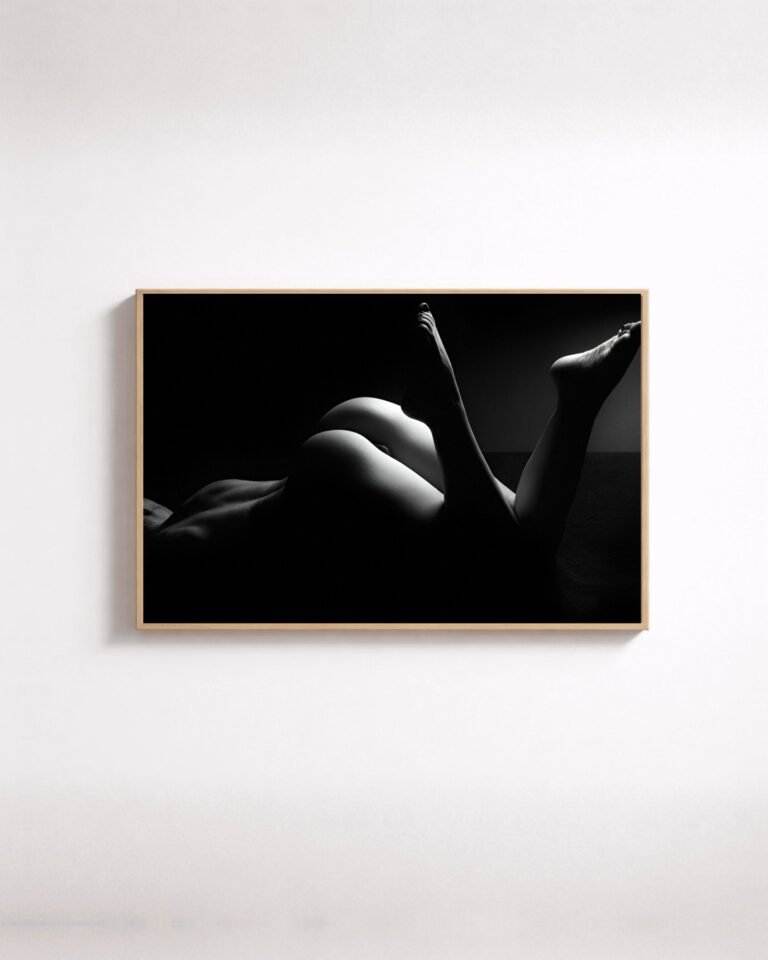
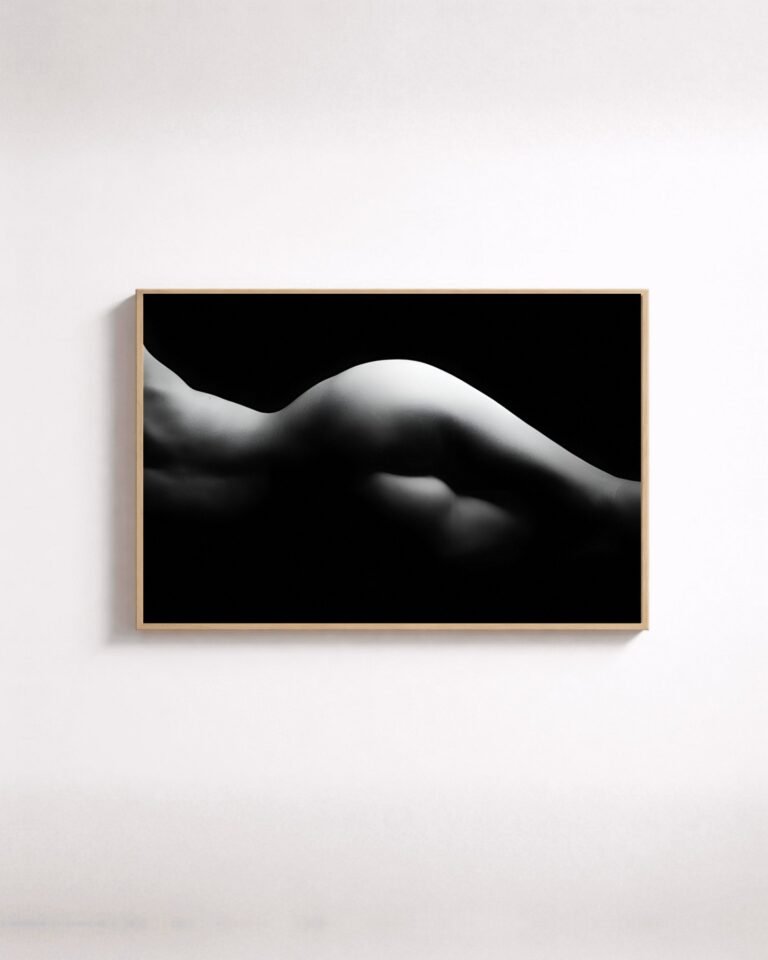
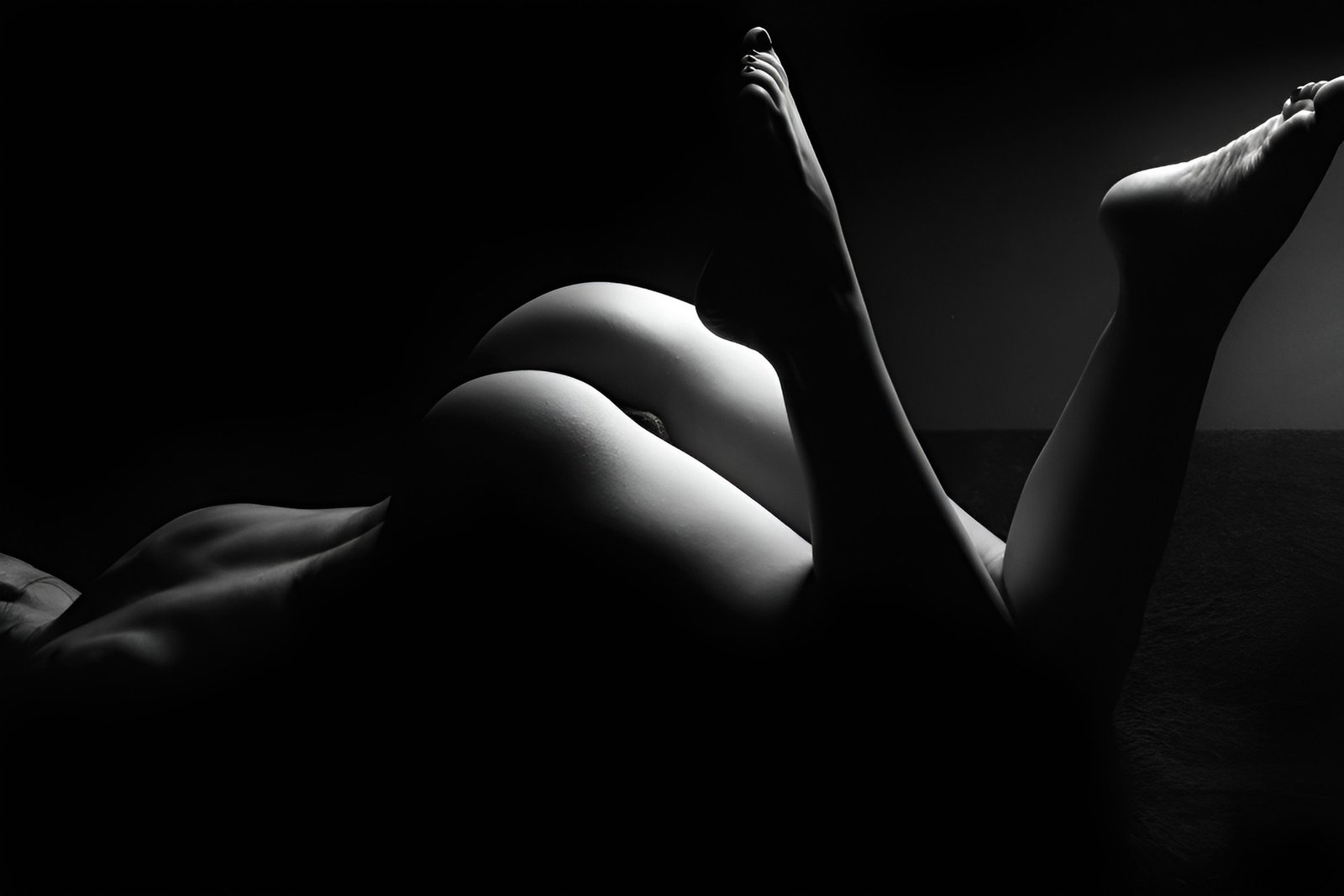
Our print Legs Against the Wall is a second photograph. A woman lies face down in near-darkness, her legs kicked up behind her, feet loose and crossed in the air, while a low, raking light runs across the curves of her body and leaves everything else black. Nothing about it is arranged into elegance. The elegance arrives anyway, carried by the light, which rakes over her back and legs the way late sun rakes over a hillside.
The case for the unposed
Posed figure photography asks the body to be architecture. Unposed figure photography lets it be weather. In this frame the strongest line is an accident: the diagonal of the raised legs cutting up into the black, answered by the long curve of the back running the other way. No art director would draw it, because no art director would dare leave so much of the frame empty. The darkness is not wasted space. It is the room the gesture breathes in.
There is also the simple matter of mood. A great deal of boudoir imagery is solemn to the point of ceremony, as if desire were a formal occasion. This photograph disagrees. It suggests that the most attractive thing a person can be is unbothered — face down, legs in the air, entirely at home in her own skin and her own afternoon. Hung on a wall, that mood is contagious. Rooms with this print in them tend to relax.
Light that does the posing
Technically, the picture is a lesson in doing less. One light, low and to the side, raking rather than flooding. Raking light exaggerates texture and contour; it finds the exact ridge where a curve turns away from the lamp and draws it in silver. Everything the light does not touch is simply allowed to stop existing, which is why the body seems to float — there is no bed, no floor, no wall to report, only the parts of the figure the light voted for.
Printed in black and white, the effect sharpens. Colour would tell you about the room, the sheets, the hour. Monochrome keeps only the argument: this much light, this much body, this much black. It is why the photograph can hang beside far more formal work without apologising. It is not informal. It is informal the way confidence is informal.
Where a smiling print belongs
Bedrooms first, obviously — but the right bedroom wall is the one the print can be seen from the bed, where its horizontal sprawl makes sense at pillow height. Dressing corners and the wall above a chaise or a low bench take it well too. Because the image is mostly black, a pale mount inside a slim frame gives it a clean edge against a light wall; against a dark wall it nearly dissolves, which some rooms will prefer. The poster sizes chart will help you judge the scale — this wave’s ceiling for the print is a modest size, and modest is correct here. The picture is a whisper, not a shout.
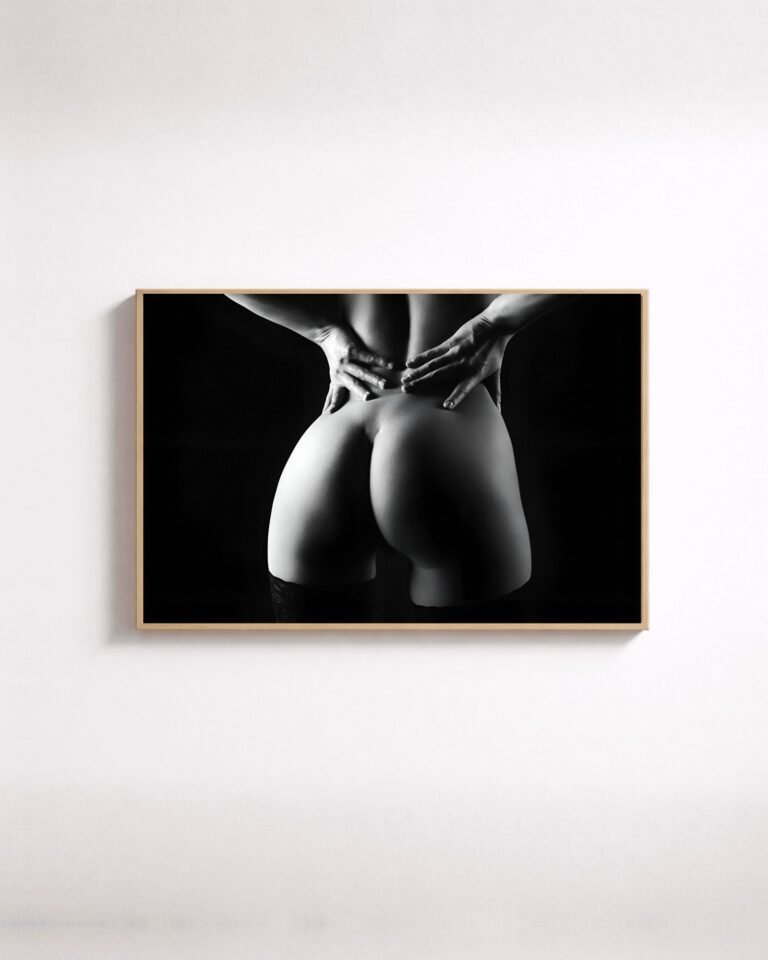
Pair it with its own family: the stillness of Bare Back in Soft Light on one side, the abstraction of Hips in Shadow on the other. Together the three make a small history of the figure study — the held pose, the landscape, and the moment after the pose, which is where this one lives, legs in the air, entirely unbothered.
Preguntas frecuentes
What moment does this photograph catch?
The moment after the pose. A woman lying face down with her legs kicked up behind her in near-darkness, light raking across the body — playful rather than posed, like a frame the photographer kept because the sitting had dissolved into laughter a second before.
Why so much darkness in the frame?
Because boudoir photography of this school is mostly withholding. The black is not background; it is the greater part of the composition, and the lit body crosses it like a sentence across a page. Cropping tighter would make it louder and much less interesting.
Where does it hang?
Bedrooms and dressing corners — private rooms, at private scale. Most buyers choose the smaller and middle sizes; it is a print to come across, not to announce a room.
What are the practical details?
Archival pigment giclée at 300 dpi on 200gsm FSC-certified matte paper, made to order in about 72 hours, shipped free and tracked worldwide. Framing in black, white, natural or dark wood on sizes from 27×35 to 70×100 cm.