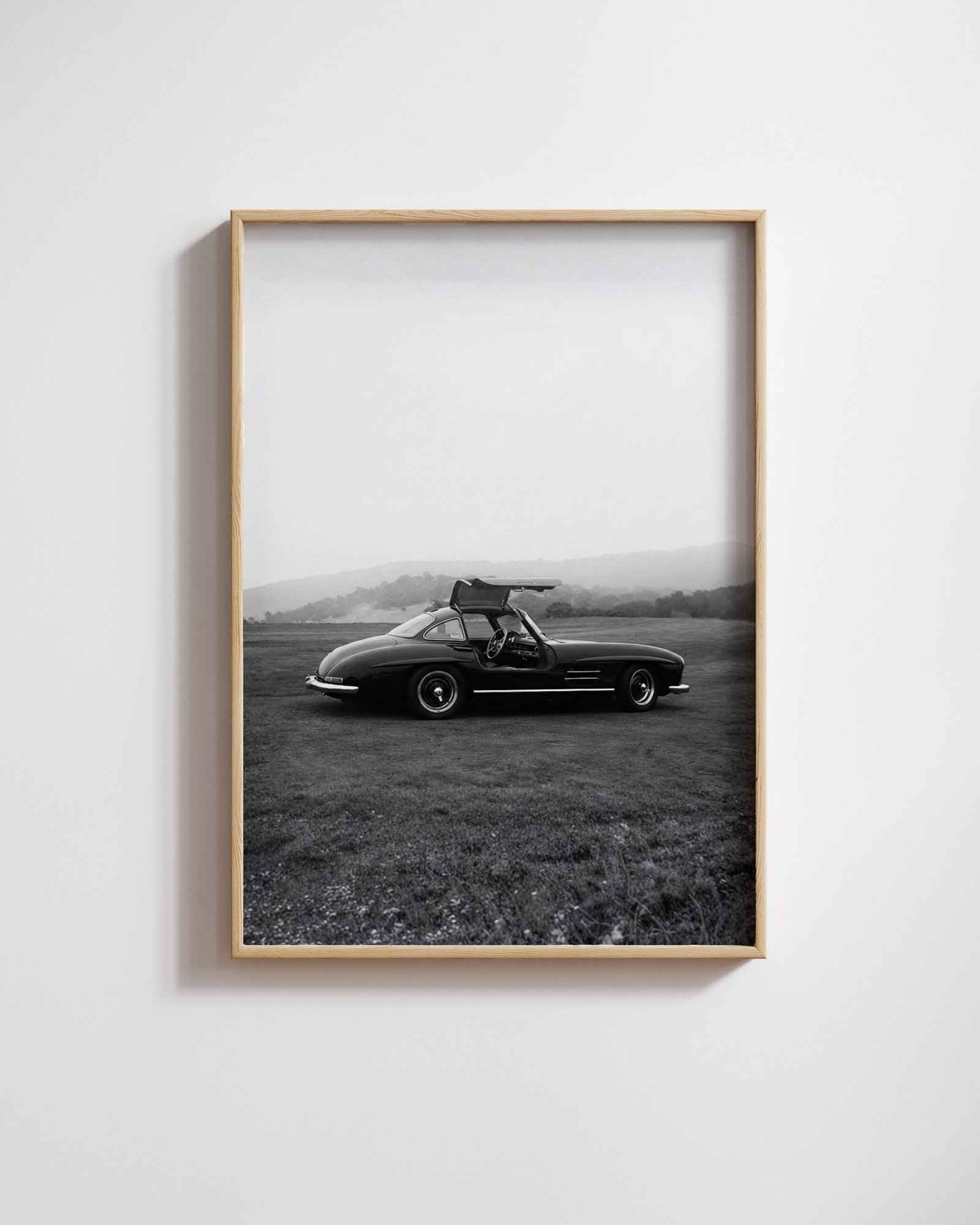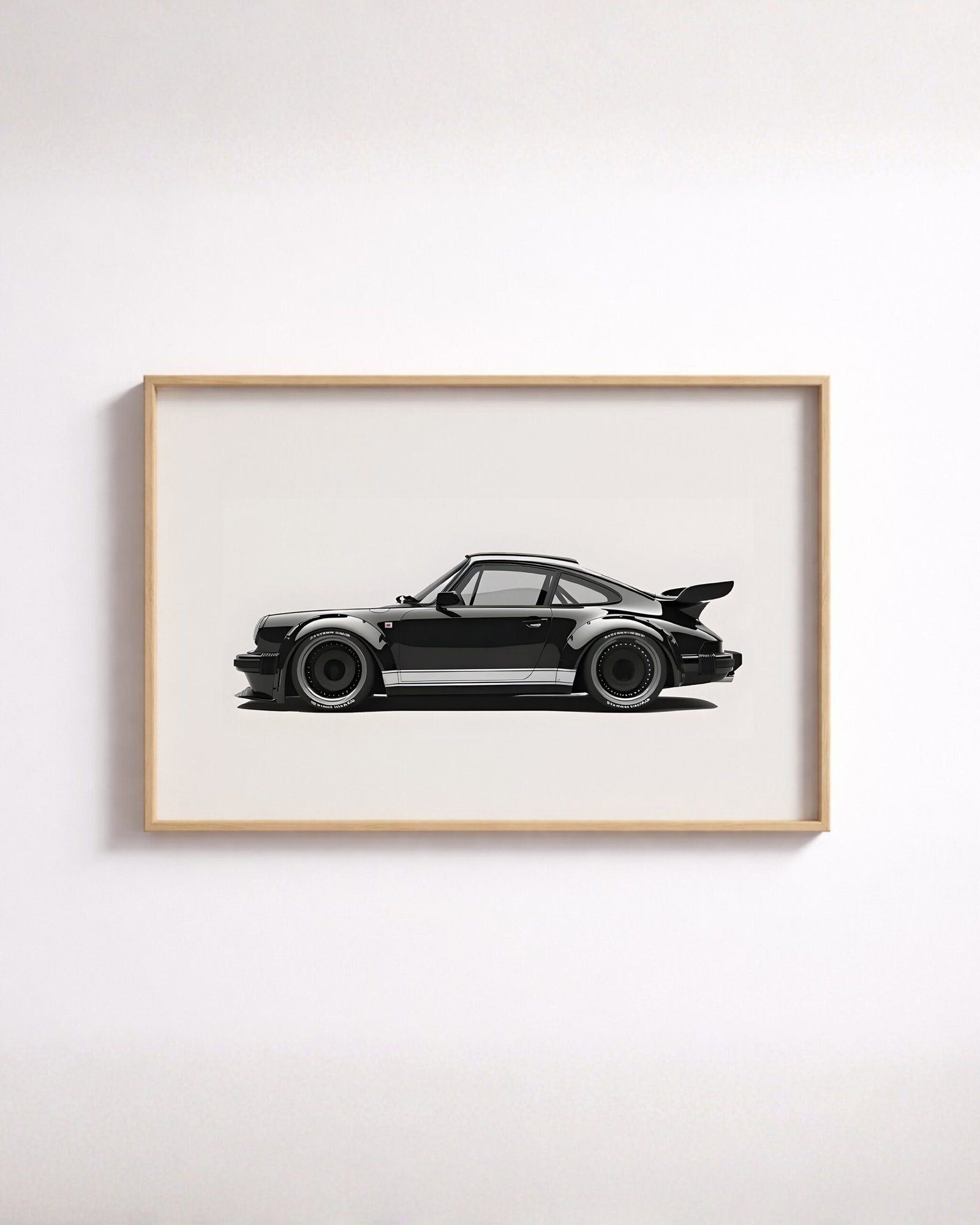
What size should art be over a sofa? As a starting point: somewhere between two-thirds and three-quarters of the sofa’s width, centred, with 15 to 25 cm between the top of the cushions and the bottom of the frame. That single line answers most of the question. What it does not answer is what those fractions mean once an actual sofa and an actual print size are involved, which is the part worth working out properly.

What size should art be over a sofa: the two-thirds rule
The two-thirds to three-quarters range is a decorating convention, not a published standard — no body issues it and nothing enforces it. It earns its place anyway, because it heads off the two ways this goes wrong at once: a print that reads as stranded in the middle of a big wall, and a print that overhangs the arms of the sofa and looks like an accident. Stay inside the range and both failures are hard to hit by mistake.
Three sofa widths, worked out
The range only becomes useful once it is run against a real number. Three widths cover most living rooms.

- A loveseat or two-seater, around 160 cm wide. Two-thirds to three-quarters of that is 107 to 120 cm. A single Porsche 911 Turbo (930) poster at A0, hung landscape, gives 118.9 cm — inside the range on its own. A pair works too: two 50×70 cm prints with a 5 cm gap between them span 105 cm, just under it.
- A three-seater, around 200 cm wide. The range is 133 to 150 cm, and no single sheet reaches that — the largest sheet in the catalogue, A0, tops out at 118.9 cm on its long edge. A pair of 60×80 cm prints with a 5 cm gap spans 125 cm; three 40×50 cm prints with 5 cm gaps span 130 cm. Either lands inside the range; a single large print, deliberately smaller than the rule asks for, is the third option, and it still reads as considered rather than stingy.
- A sectional or a wide wall, 260 cm and up. Here the rule stops being useful taken literally — two-thirds of 260 cm is 173 cm, and reaching that would mean four or five prints in a row, which stops looking like a considered choice and starts looking like wallpaper. Past about 220 cm, treat the range as a ceiling, not a target: centre a trio or an asymmetric pair over the middle of the sofa and leave visible wall on both sides.
When one print will never be enough
Past 200 cm of sofa, a single print cannot reach two-thirds of the width on its own, because nothing in a 17-size catalogue is wider than A0’s 118.9 cm. That is not a gap in the size range; it is the point at which a pair or a trio is the correct answer, not a compromise. A pair of the Mercedes 300 SL Gullwing poster at 60×80 cm, hung with a 5 cm gap, does the job a single oversized print cannot.
Narrower beats wider, every time
If a size sits right on the edge, round down. Art that runs wider than the sofa beneath it reads as a mismatch even by a few centimetres — one arm of the sofa ending under bare wall while the frame keeps going past the other. Art that sits a little narrower always reads as a choice instead. A single Vintage Formula 1 Pit Lane Kiss print at 70×100 cm sits comfortably under the two-thirds line on most three-seaters — smaller than the rule allows, and still correct.
The full size guide works through the entire 17-size ladder and how high to hang whatever is chosen. If a wall still looks bare no matter what goes on it, the most common wall-art mistake is worth reading before buying. For what changes between an unframed and a framed print at these sizes, framed or rolled covers the rest of the decision.
Common questions
How big should wall art be above a sofa?
Aim for two-thirds to three-quarters of the sofa's width, centred, with 15 to 25 cm between the cushions and the frame. A 160 cm loveseat wants roughly 107 to 120 cm of picture; a 200 cm three-seater wants 133 to 150 cm. Nothing has to hit that exactly — a single print a little smaller, or a pair that adds up to it, both work.
Should wall art be wider or narrower than the sofa?
Narrower, always. Art that runs wider than the sofa beneath it reads as a mismatch even by a few centimetres, with one arm of the sofa ending under bare wall while the frame keeps going past the other. If a size sits right on the edge, round down rather than up.
What if my sofa is too wide for any single print?
Past about 200 cm, no single sheet reaches two-thirds of the width — the largest, A0, is 118.9 cm on its long edge. Use a pair or a trio instead: two 60x80 cm prints with a 5 cm gap span 125 cm, and three 40x50 cm prints span 130 cm.
Can wall art above a sofa be too big?
Yes. A single print noticeably wider than the sofa beneath it looks like it belongs to a different wall, and one that spans the full width leaves no visual gap to signal it was a deliberate choice. The two-thirds to three-quarters range exists to avoid that as much as it avoids buying too small.