A pit stop poster is a strange thing to want, if you think about it literally. The subject is a car standing still. What makes it worth a frame is not the car and not the crew but the clock — and a photograph, by definition, cannot show a clock running. The three pieces in this catalogue take three different runs at that problem, and only one of them keeps anything sharp.
The subject is duration
Start with what is actually being photographed. Wikipedia’s entry on the pit stop defines it as a pause for refuelling, new tyres, repairs, mechanical adjustments, a driver change or a penalty — and then notes that in Formula One mid-race refuelling has been banned since 2010, so a stop now exists almost entirely to change tyres. It also puts a number on it: a stop typically takes approximately three seconds, and tyres are often changed in under three.
Three seconds is the whole drama. Every other element of a pit stop — the equipment, the choreography, the number of people — exists to compress that figure. Formula 1 itself treats the record as news, publishing footage of record stops on its own site.
So a photograph that freezes a pit stop perfectly has thrown away the only thing that made it interesting. It shows you a stationary car surrounded by people crouching. Blur is not a stylistic flourish here. It is the only tool a still image has for putting the three seconds back in.

Choosing a pit stop poster: what to freeze
The three pieces differ in what they let go of.
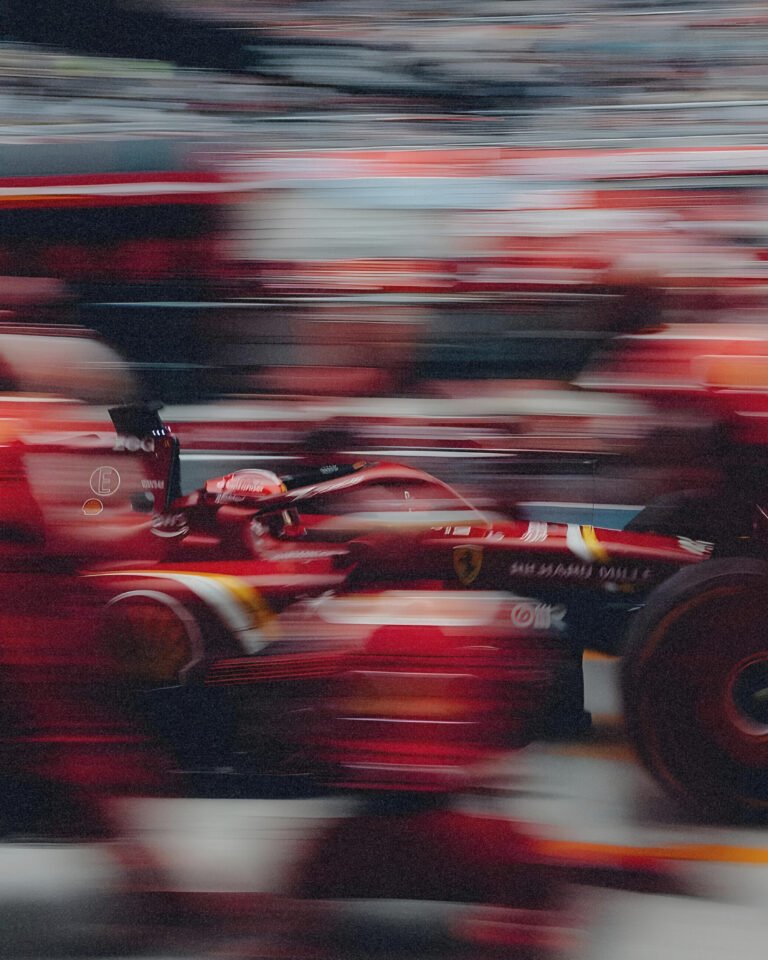
The full-colour pit lane poster lets go of everything. A red car runs down the lane and nothing in the frame holds still. This is the most abstract of the three and the most graphic — from any distance it reads as a band of colour and movement, and only close up does it resolve into a car. It is also the loudest, and it wants a wall to itself.
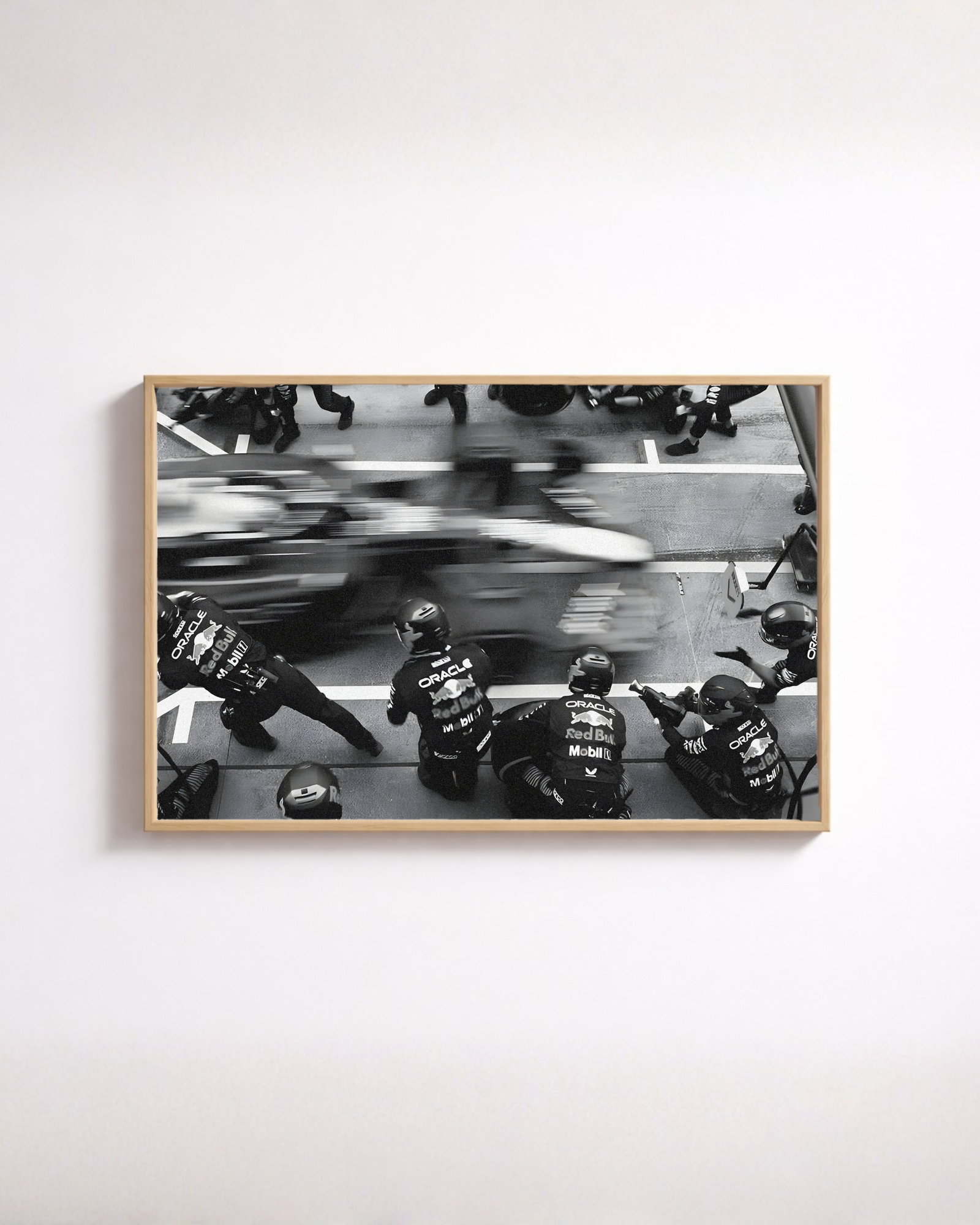
The vintage pit crew poster lets go of the car but keeps the people. Shot from overhead in black and white, the crew becomes a pattern of figures and the car underneath them becomes a smear. That inversion is what makes it work: the picture is about labour rather than machinery, and it is the one that a viewer with no interest in racing will still stand and read.
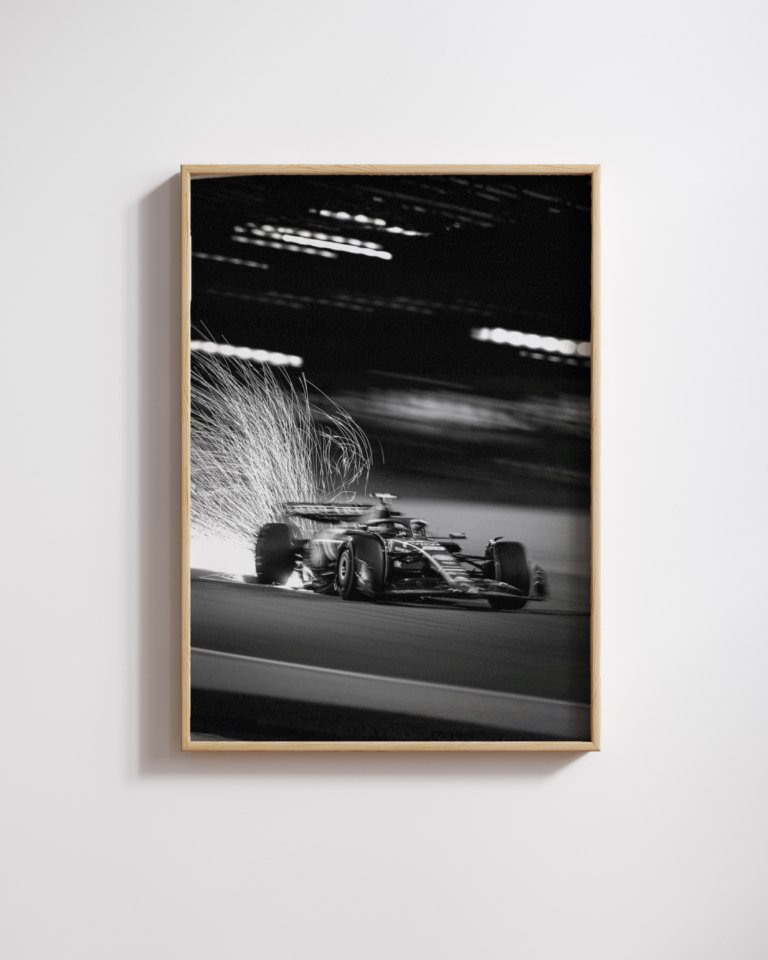
The blurred Formula 1 wall art print is the third option and the most atmospheric — a Formula One car throwing sparks under blurred lights, in monochrome. It is not a pit stop, strictly. It is the same idea applied to the track, and it hangs well beside either of the other two.
Colour or monochrome
There is a clean rule here, and it comes out of what each picture is about.
- If the car is the subject, take colour. A racing car’s identity is substantially its livery, and monochrome throws that away. The full-colour pit lane print keeps it.
- If the crew is the subject, take monochrome. People in overalls photograph better without team colours competing for your attention. The overhead crew shot would be a much weaker picture in colour.
- If you want both on one wall, take one of each. They do not fight, because they are doing different jobs.
Why older pit lane pictures look busier
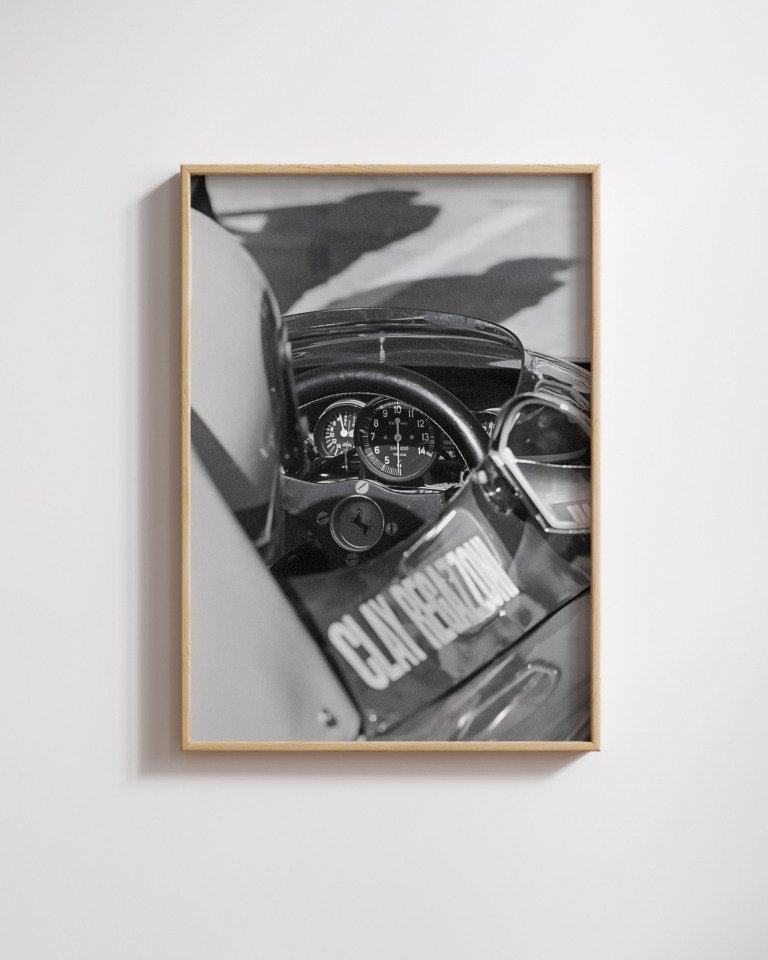
If you compare a modern pit stop with a vintage one, the older frame usually has more in it, and there is a reason. Before the 2010 ban, a Formula One stop included refuelling, which meant a rig, a hose, a dedicated crew for it and a stop long enough to photograph without a slow shutter. Take the fuel away and the stop collapses to tyres and a few seconds, and the crew closes tightly around the four corners of the car. The choreography in a recent picture is denser and shorter; the older one is looser and has more room in it.
What we will not tell you
None of these captions names a race, a team or a year. The cars and the crews are identifiable as Formula One and that is where the evidence in the frame ends. We do not have a circuit or a date on record for any of them, and printing one would be inventing provenance for a picture — which is a habit this catalogue has deliberately been written out of.
Where a subject genuinely can be identified from what is visible, we say so. A car number and a livery can identify a specific machine; a group of mechanics around an unmarked car cannot.
Size and placement
All three are landscape, which points them at horizontal walls. That matters more than usual for blurred images: a motion-blurred frame hung small stops reading as motion and starts reading as a mistake. If the wall will only take a small frame, one of the sharper pieces in the catalogue is the better buy.
Distance matters too. The overhead crew shot is the one that rewards standing close, because the detail is in the individual figures. The colour pit lane print is the opposite — it is strongest from across a room, where the blur resolves into a single gesture.
For how the pit stop itself got down to a few seconds, we have a longer piece on the history. For why the cars in these frames look the way they do, there is the article on how the rule book redrew them.
Häufige Fragen
Why is a blurred pit stop poster a better picture than a sharp one?
Because a sharp photograph of a stationary car in a pit box is a photograph of a car park. The interest in a pit stop is duration - Wikipedia notes that a Formula One stop typically takes about three seconds - and duration is the one thing a frozen frame cannot show. Blur is how a still photograph says "this took two seconds".
What actually happens in a modern Formula One pit stop?
Almost entirely tyres. Mid-race refuelling has been banned in Formula One since 2010, so the stop exists to change rubber and occasionally to make an adjustment or take a penalty. That is why the crews you see are organised around the four corners of the car rather than around a fuel rig.
Colour or monochrome for pit lane pictures?
Colour, if the car is the subject and you want the livery to carry the frame. Monochrome, if the crew is the subject - people in overalls photograph better without team colours pulling your eye around the frame.
Do these pictures show a specific race?
We do not claim one. The cars and the crews are identifiable as Formula One, and that is where the evidence in the frame stops. We do not print a circuit or a year over an image we cannot source.