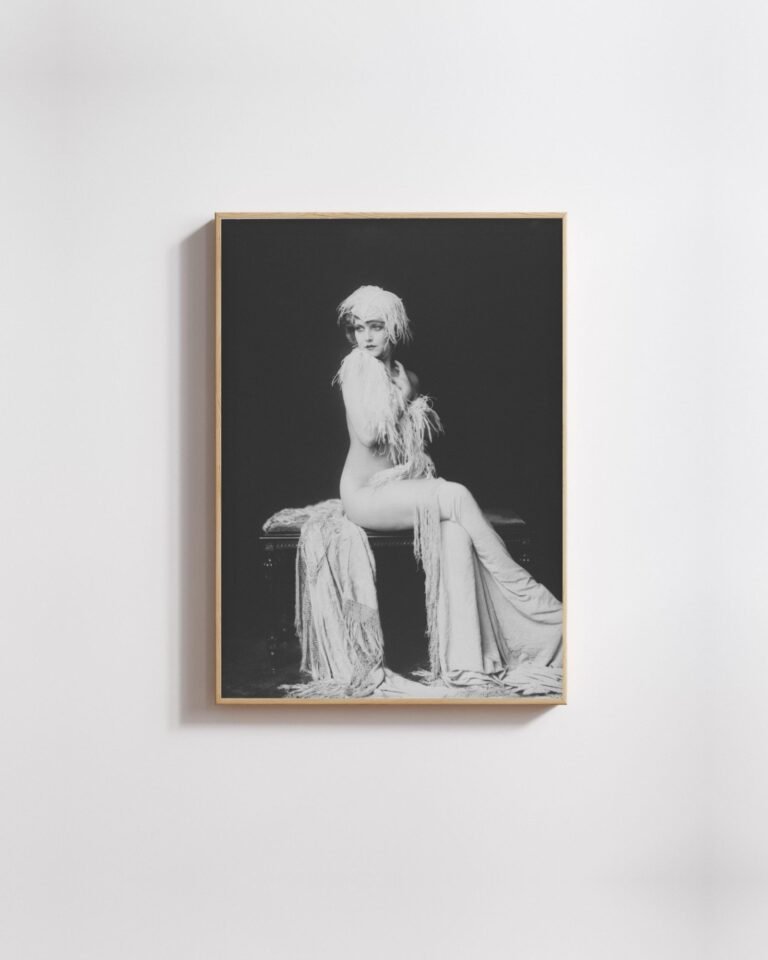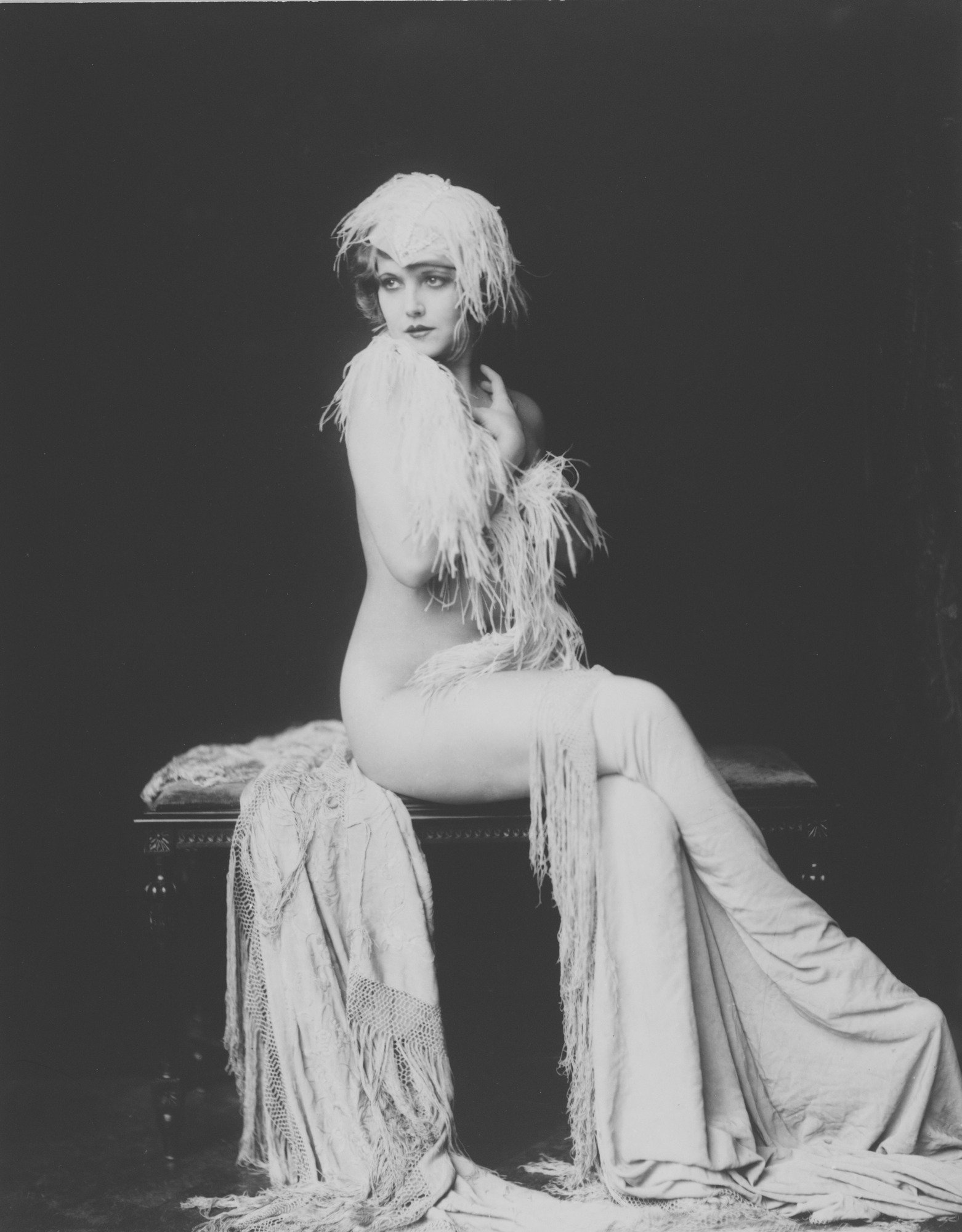
Every glamour studio of the 1920s kept feathers. They were kept the way a painter keeps white paint: as the material that catches light best, softens any edge it touches, and makes a sitter look, for the length of a sitting, like a creature from a more decorative world. Our print Platinum Study with Plume is the feathered sitting at its most complete — a platinum-haired sitter in profile on a low bench, a tall plume headdress crowning her waved hair, a soft boa gathered at one shoulder, long draped fabric falling from her lap to pool on the floor, and behind her the studio’s other great material: darkness, pure and unbroken.
The black backdrop was the era’s boldest studio choice. Painted scenery located a sitter; the void universalised her. Against nothing at all, the lit figure stops being a performer in costume and becomes a study — of profile, of posture, of the way a feather’s edge dissolves light that a harder material would bounce. The photographers of the theatrical studios understood this instinctively and used the void for their most ambitious frames, the ones meant to be kept rather than merely published.
Feathers, and how they photograph
A plume is a photographer’s gift and problem in one. Its filaments are fine enough to read as mist at the edges and solid at the core, so a single exposure holds both a shape and an atmosphere. Lit from the side, as here, the headdress becomes a halo with a structure; the boa at the shoulder makes a soft diagonal that the bench’s horizontal answers; and the sitter’s turned head, chin level, gaze directed out of frame, gives the composition its calm. Nothing moves, yet the whole photograph is made of things that would move in the slightest air — which is why it feels alive rather than arranged.
The sittings that produced frames like this were small productions. The studio’s wardrobe held the plumes, boas, shawls and drapes; the sitter, often a young performer between engagements, brought the patience. Exposures were made on large-format negatives whose size is why these images still print with such depth a century later — the tonal scale in the feathers alone, from bright filament to shadowed core, is something smaller formats of the day could not hold.
On the wall
With so much black in the frame, the print behaves like a stage lit for one figure, and it lends evening to whatever room receives it: a dressing room, a bedroom, a bathroom with a long wall and low light. It is the most theatrical of the studio set, and it wants a little ceremony in the hanging — space around it, a pale mount if the room is dark, nothing competing on the same wall. The poster sizes chart shows the sizes against a standard wall; this is a frame that justifies going larger, because the feathers repay it.
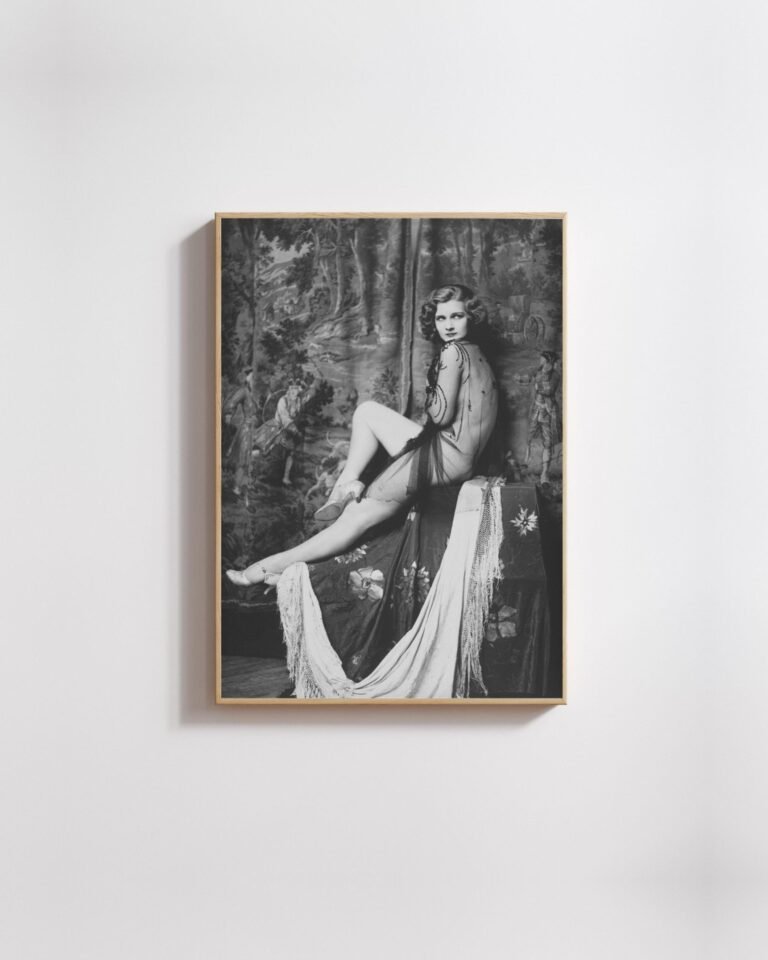
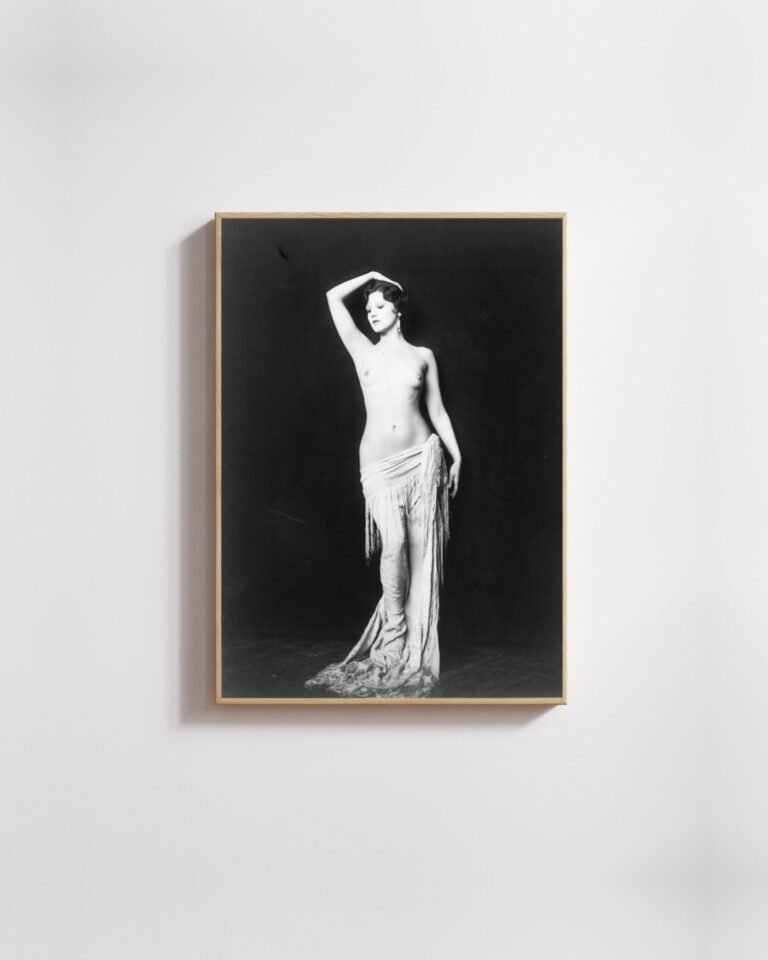
Its siblings make two natural companions: Seated in the Tapestry Room, where the same studio fills the background with scenery instead of void, and Full-Length Study, Arm Raised, the set’s classical pose against the same darkness. Across the store, The White Wedge and the Woman in Black plays the same game sixty years later — one figure, three tones, and nothing in the frame that does not earn its place.
The frame survives because the nation’s great print archive preserved the studio’s legacy when so much else of the era’s commercial photography was thrown away. That survival changed the work’s meaning: what was made as theatrical publicity is now read, correctly, as portraiture — and the plume sitting, with its halo of lit feathers against the void, may be the single image that best explains why the archive bothered.
Photograph: Alfred Cheney Johnston; Library of Congress, Prints & Photographs Division — No known restrictions on publication. Source: the holding archive.
أسئلة شائعة
What is the plume in this portrait?
A tall feather plume worn by a platinum-haired sitter of the 1920s, photographed in profile against a black studio backdrop — feathers, pale hair and a great deal of darkness. Theatrical portraiture of the era loved an extravagant vertical accent, and nothing in the frame competes with this one.
Why does the profile matter?
Profile is the most formal of portrait angles — coins, cameos and medals are struck in profile — and the studio photographers of the twenties used it deliberately for glamour. It withholds the sitter's expression and gives you silhouette instead: plume, brow, shoulder, dark.
Where should it hang?
Dressing rooms and evening rooms, at intimate scale. It belongs to the collection's set of 1920s studio studies; with the tapestry portrait and the lace profile it makes a complete wall of the era's glamour photography.
How is it printed?
Archival pigment giclée at 300 dpi on 200gsm FSC-certified matte paper — matte stock is essential here, because the portrait is mostly black and glare would flatten it. Made to order in about 72 hours; free tracked shipping worldwide.